Artist Biennial
Joan Mitchell
1925–1992
Biography
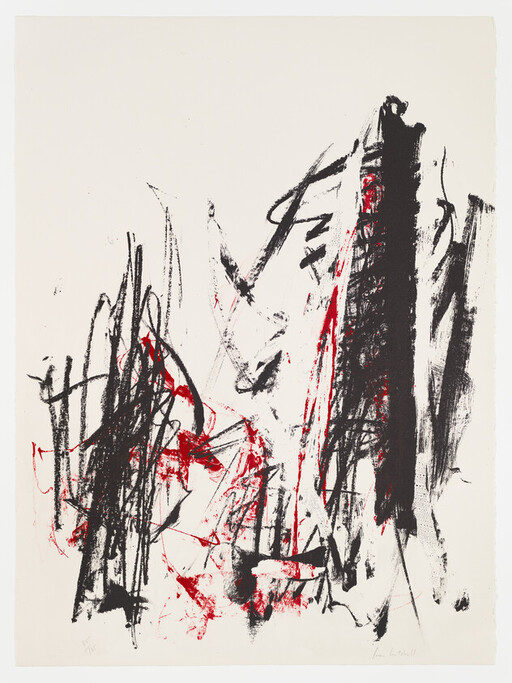
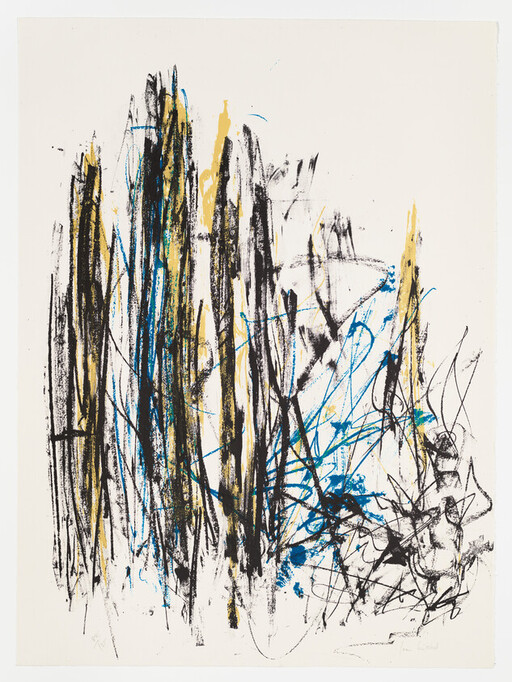
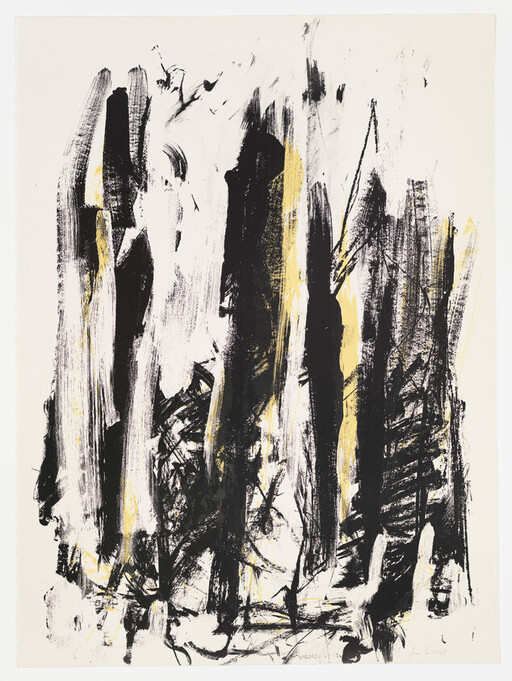
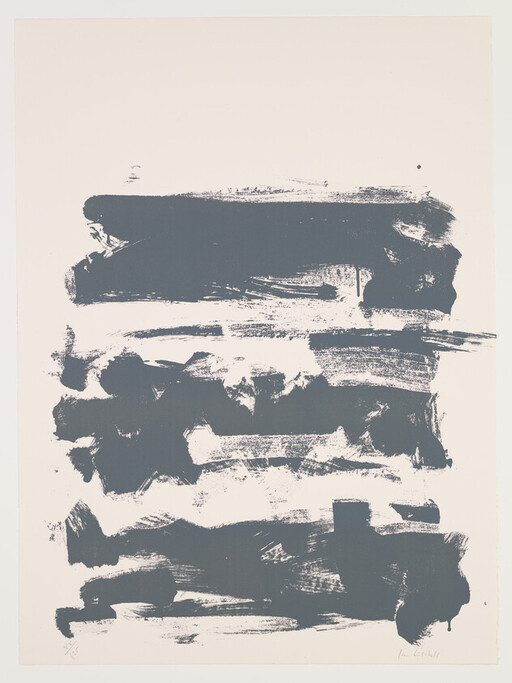
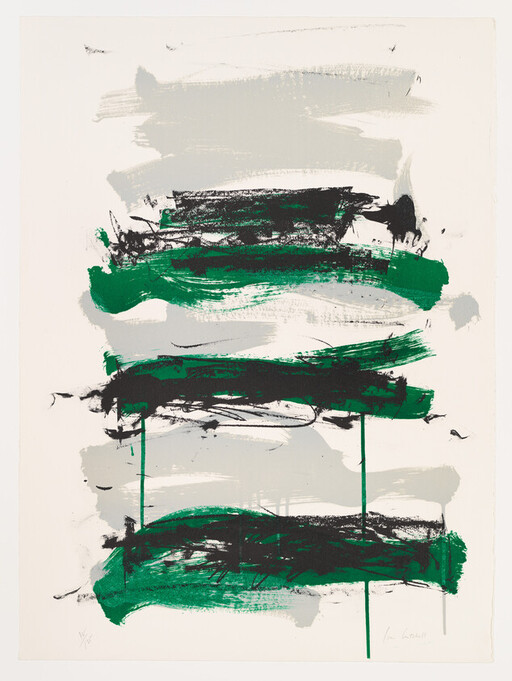
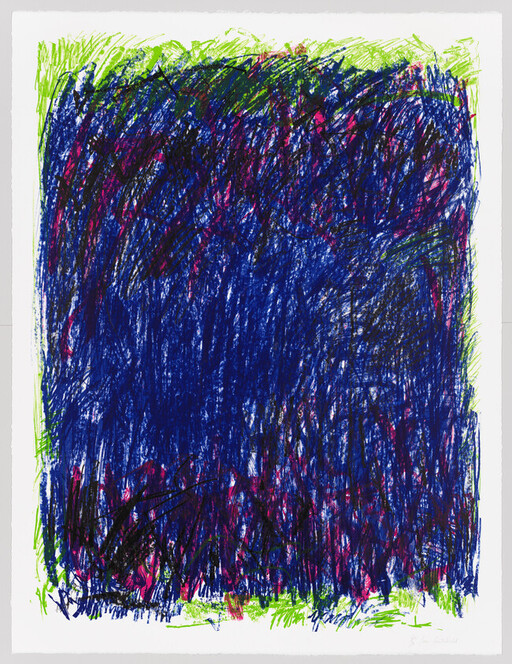
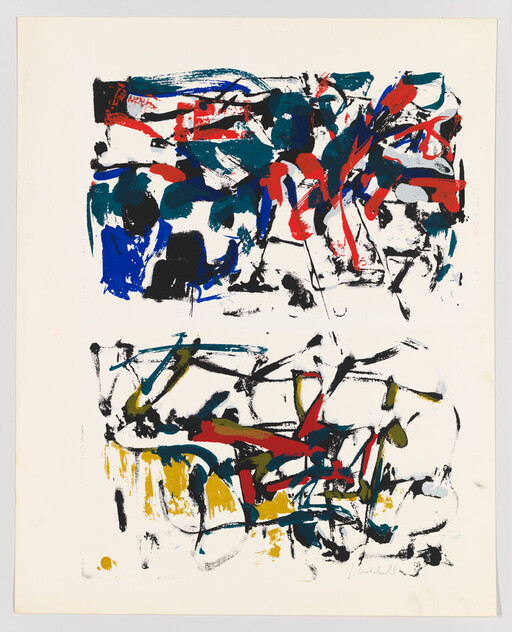
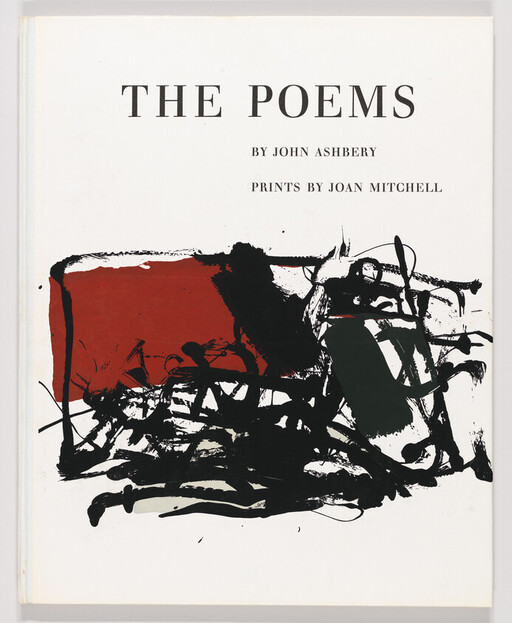
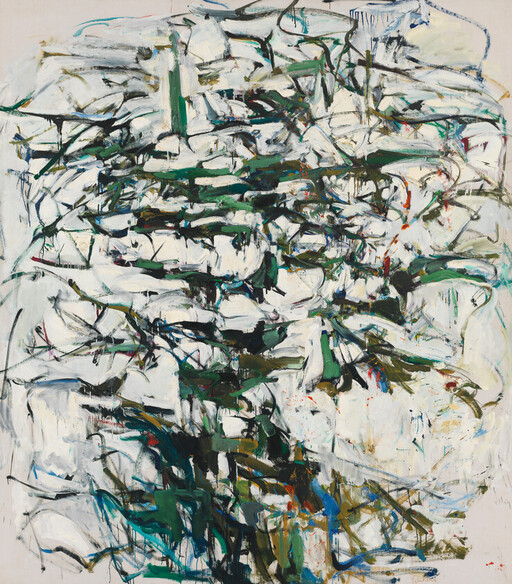
Joan Mitchell’s exposure to art began at an early age: her father was an amateur artist, and her mother was an associate editor at Poetry magazine. Mitchell studied at Smith College and Columbia University, and earned degrees from the School of the Art Institute of Chicago. Influenced by the work of Franz Kline and Willem de Kooning, Mitchell began working in an abstract mode in the early 1950s, becoming one of the few women—in addition to Helen Frankenthaler and Lee Krasner—to gain notice as an Abstract Expressionist. Mitchell’s paintings are characterized by boldly expressive, varied brushwork; an adventurous feel for color; and a dynamic, often unresolved tension between figure and ground. If such qualities aligned her works with the New York School, their lingering, if tenuous, connection to the outside world, specifically in their evocation of natural sensations such as light and movement, set them apart. The title Hemlock (an allusion to a Wallace Stevens poem), for example, promotes a reading of the work’s imagery as a tree, and indeed the tight central cluster, composed of verdant calligraphic spikes, supports such an interpretation. The color white functions in this work as both foreground and background, flatness and relief, creating an effect of atmospheric lyricism and contributing to the sense that Hemlock is as much about the experience of seeing as it is about the thing seen.
Mitchell left New York for France in 1959 and remained committed to painting abstract takes on landscape throughout the 1960s and 1970s, calling herself “the last Abstract Expressionist.”
Works in the collection
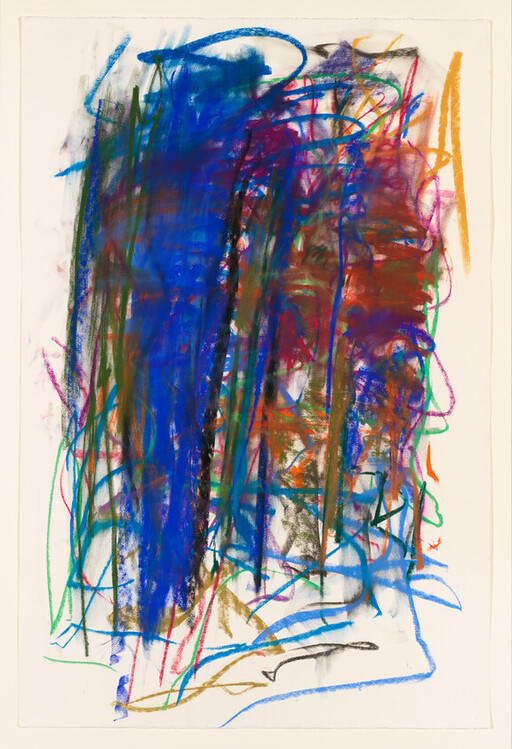
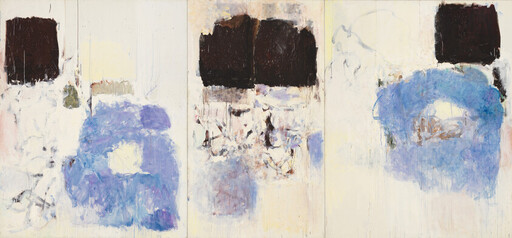
Exhibitions at the Whitney
- The Whitney’s Collection: Selections from 1900 to 1965 2019-06-28 – 2025-05-01
- America Is Hard to See 2015-05-01 – 2015-09-27
- The Whitney’s Collection 2008-01-30 – 2010-01-03
- Modernisms 2007-08-29 – 2008-01-13
- Full House: Views of the Whitney’s Collection at 75 2006-06-29 – 2006-09-03
- Building and Breaking the Grid: 1962–2002 2005-09-01 – 2006-01-08
- De Kooning to Today: Highlights from the Permanent Collection (2nd floor–Oct 2002) 2002-10-10 – 2003-03-02
- The Paintings of Joan Mitchell 2002-06-20 – 2002-09-29
- Prints from the 1950s and Early 1960s: Selections from the Collection 1995-10-25 – 1996-01-21
- Joan Mitchell: Pastel 1992-03-18 – 1992-06-21
- Whitney Biennial 1991 1991-04-02 – 1991-06-30
- Whitney Biennial 1983 1983-03-15 – 1983-05-29
- Whitney Biennial 1973: Contemporary American Art 1973-01-10 – 1973-03-18
- 1967 Annual Exhibition of Contemporary Painting 1967-12-13 – 1968-02-04
- 1965 Annual Exhibition of Contemporary American Painting 1965-12-08 – 1966-01-30
- Annual Exhibition 1961: Contemporary American Painting 1961-12-13 – 1962-02-04
- 1959 Annual Exhibition of Contemporary American Painting 1959-12-09 – 1960-01-31
- 1957 Annual Exhibition: Sculpture, Paintings, Watercolors 1957-11-20 – 1958-01-12
- 1955 Annual Exhibition of Contemporary American Painting 1955-11-09 – 1956-01-08
- 1951 Annual Exhibition of Contemporary American Painting 1951-11-08 – 1952-01-06