Artist Biennial
Mark Rothko
1903–1970
Biography
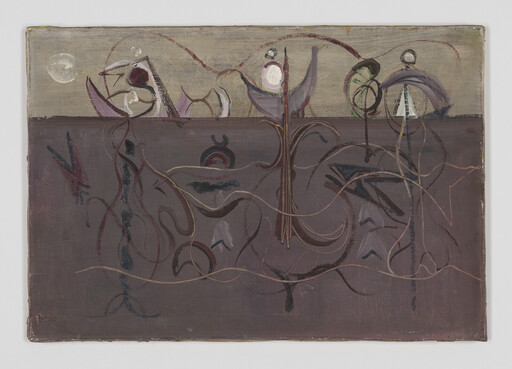
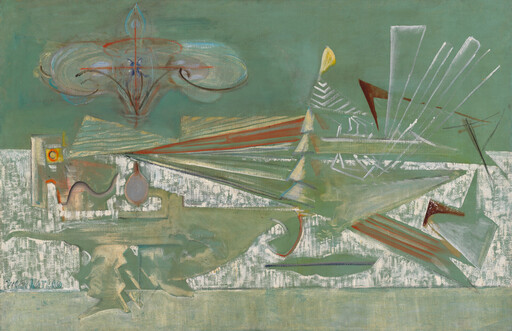
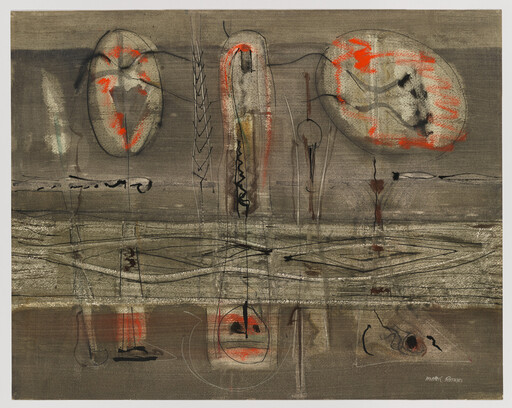
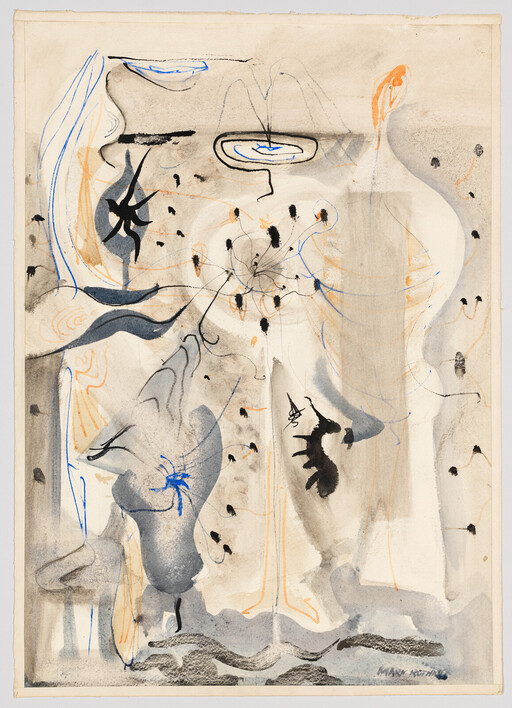
Born in Dvinsk, Russia (now Daugavpils, Latvia), Mark Rothko emigrated at the age of ten to the United States, where he became a leading member of the Abstract Expressionist circle of painters that emerged in New York during the 1940s. In the early years of his career, Rothko painted Surrealist-inflected works in which he used forms derived from primitive totems and mythologies to commune with the epic and tragic events of ancient epochs—which corresponded, he believed, to the horrors and devastation wrought by World War II.
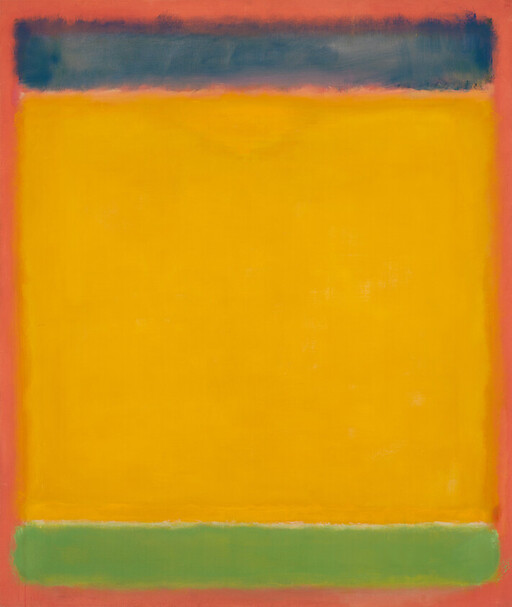
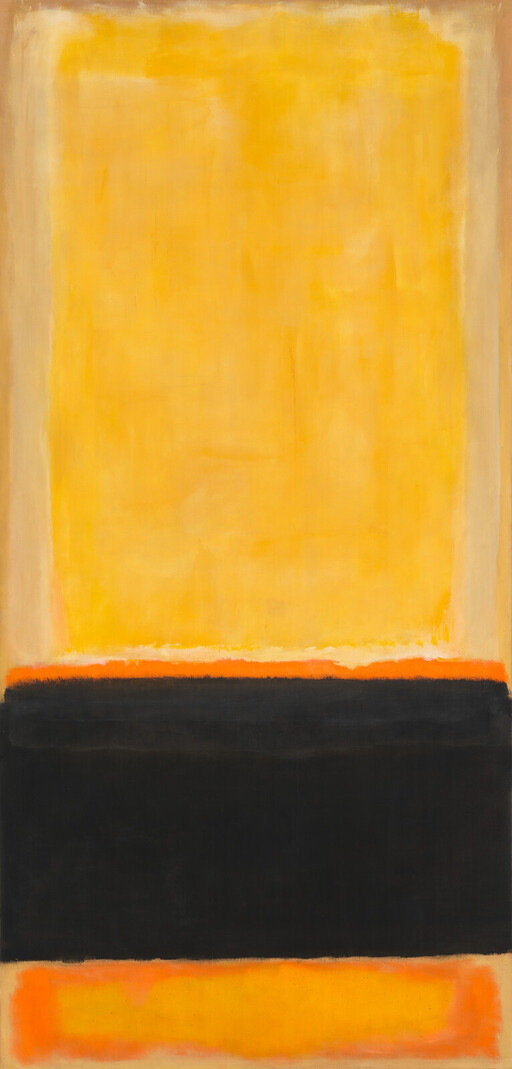
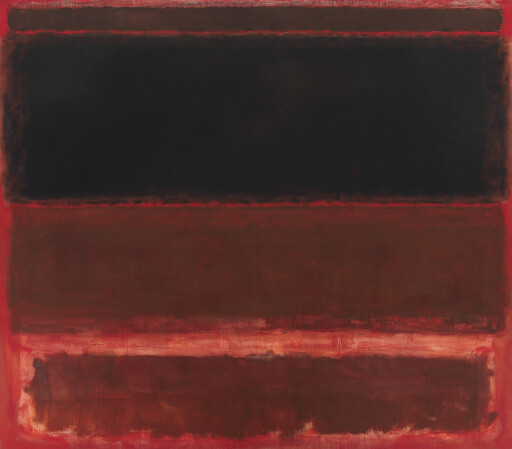
By the late 1940s, Rothko shifted to pure abstraction, filling his canvases with stacked horizontal bands of luminous color in order to express what he described as “basic human emotions—tragedy, ecstasy, doom.” He would continue to explore this format in various iterations for the duration of his career. These works came to epitomize the branch of Abstract Expressionist painting known as Color Field—defined by subtly modulated chromatic compositions that were distinct from the agitated gesturalism of painters such as Jackson Pollock and Willem de Kooning. Four Darks in Red belongs to a group of dark, somber-toned works from the late 1950s. For these works Rothko painted on an increasingly large scale, a format he also employed in a contemporaneous mural commission (ultimately abandoned) for the Seagram Building in New York. The painting’s black and maroon hues, layered in thin, atmospheric veils over a vivid red background, impart a sense of depth and muted radiance that envelops the viewer and commands total emotional and visual engagement.
Works in the collection
Exhibitions at the Whitney
- Where We Are: Selections from the Whitney’s Collection, 1900–1960 2017-04-28 – 2019-06-02
- America Is Hard to See 2015-05-01 – 2015-09-27
- Shaping a Collection: Five Decades of Gifts 2014-07-17 – 2014-10-19
- Signs & Symbols 2012-06-28 – 2012-10-28
- Collecting Biennials 2010-01-16 – 2010-11-28
- Modernisms 2007-08-29 – 2008-01-13
- Full House: Views of the Whitney’s Collection at 75 2006-06-29 – 2006-09-03
- Landscape 2005-03-24 – 2005-09-18
- An American Legacy, A Gift to New York 2002-10-24 – 2003-01-26
- De Kooning to Today: Highlights from the Permanent Collection (2nd floor–Oct 2002) 2002-10-10 – 2003-03-02
- Highlights from the Permanent Collection: From Pollock to Today 2000-12-07 – 2002-02-10
- Mark Rothko 1998-09-17 – 1998-11-29
- Permanent Collection 1998-04-04 – 1999-03-28
- An American Story 1996-03-20 – 1996-09-29
- In a Classical Vein: Works from the Permanent Collection 1993-10-18 – 1994-04-03
- 1950 Annual Exhibition of Contemporary American Painting 1950-11-10 – 1950-12-31
- 1949 Annual Exhibition of Contemporary American Painting 1949-12-16 – 1950-02-05
- 1949 Annual Exhibition of Contemporary American Sculpture, Watercolors and Drawings 1949-04-02 – 1949-05-08
- 1948 Annual Exhibition of Contemporary American Sculpture, Watercolors and Drawings 1948-01-31 – 1948-03-21
- 1947 Annual Exhibition of Contemporary American Painting 1947-12-06 – 1948-01-25
- 1947 Annual Exhibition of Contemporary American Sculpture, Watercolors and Drawings 1947-03-11 – 1947-04-17
- 1946 Annual Exhibition of Contemporary American Painting 1946-12-10 – 1947-01-16
- 1946 Annual Exhibition of Contemporary American Sculpture, Watercolors and Drawings 1946-02-05 – 1946-03-13
- 1945 Annual Exhibition of Contemporary American Painting 1945-11-27 – 1946-01-10