Artist Biennial
Jackson Pollock
1912–1956
Biography
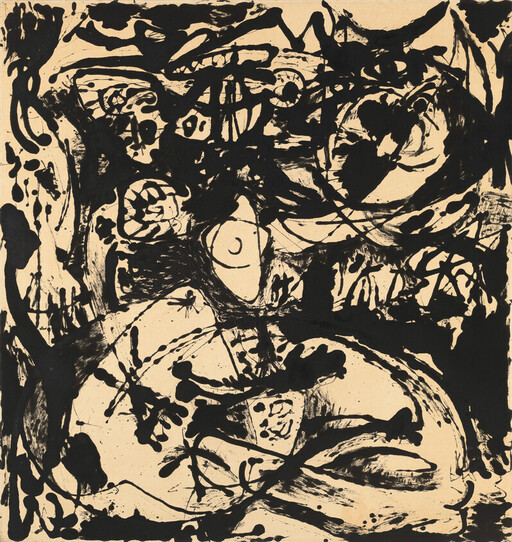
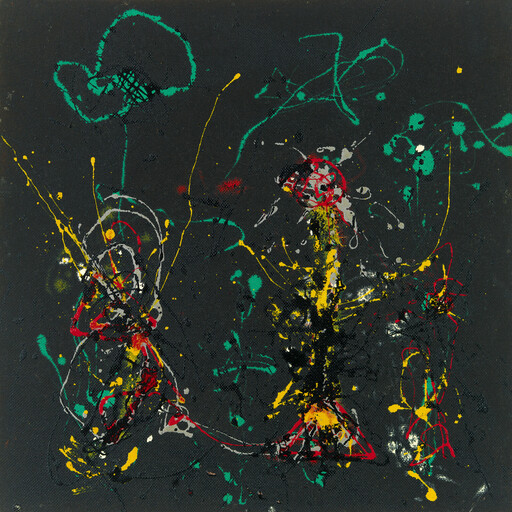
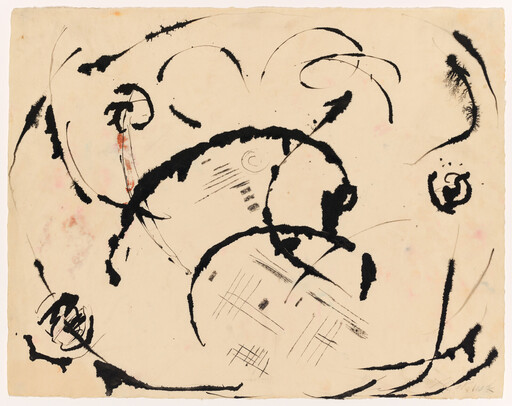
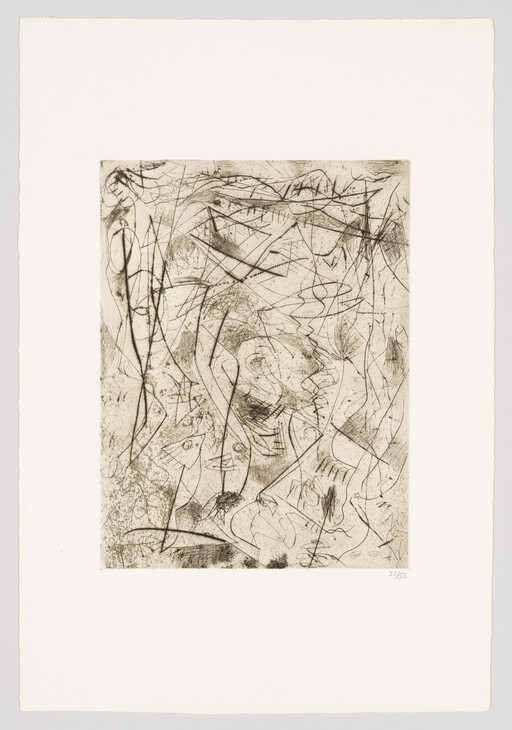
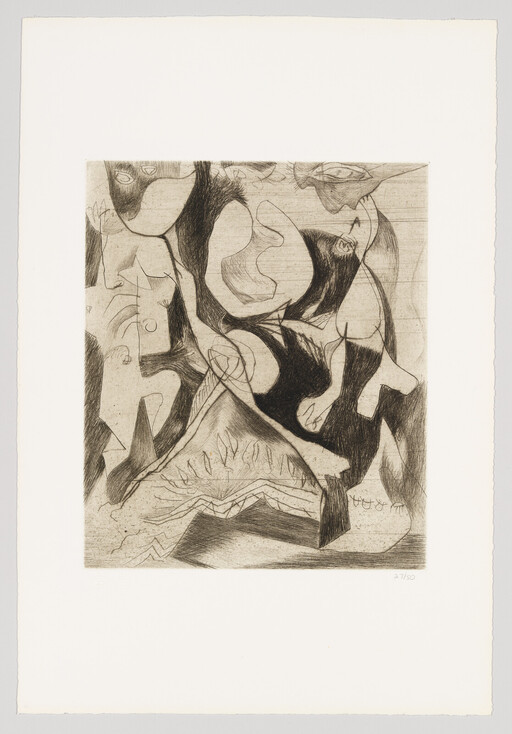
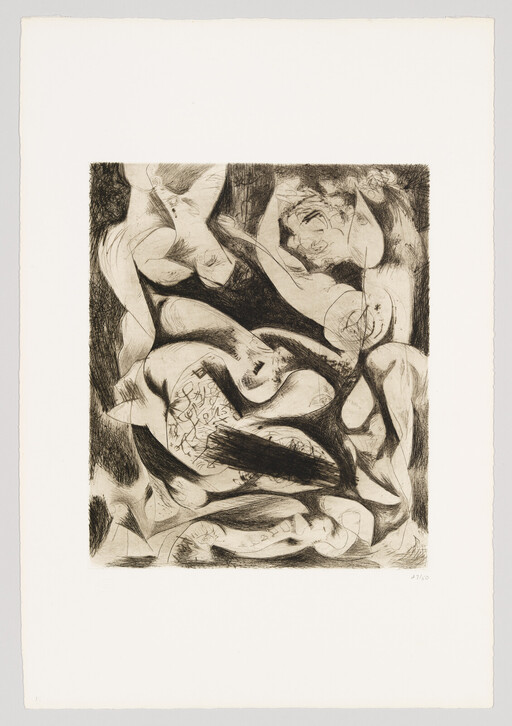
Jackson Pollock “broke the ice,” as Willem de Kooning famously declared, clearing the way for an entire generation of abstract artists in the years following World War II. A key figure among the loosely affiliated group referred to as the New York School, he sought a new mode of painting that was both personal and relevant to his time. Pollock had become acquainted with a number of the Surrealists who fled to New York during the war, and their model of psychic automatism, a method that employed spontaneous expression and allowed for manifestations of the unconscious, was particularly important to his artistic progression.
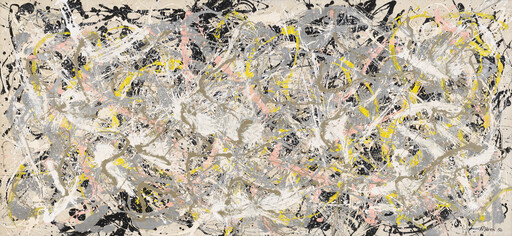
In 1947 Pollock developed the innovative method evinced in Number 27, 1950 and his other “drip” paintings. He tacked unstretched, unprimed canvas onto the floor of his studio. Then he dipped hardened brushes and wooden stir sticks into cans of enamel or aluminum paint and dripped, flung, and poured liquid pigment directly onto the cloth. “On the floor I am more at ease,” Pollock explained. “I feel nearer, more a part of the painting, since this way I can walk around it, work from the four sides and literally be in the painting.” With gestures at once controlled and improvisatory, he laid down skeins of black lines before adding looping cords of pink, silver, yellow, brown, and white to create an allover composition. The dense, overlapping layers seem to vibrate with energy. Pollock’s emphasis on spontaneity and the revelatory quality of his process helped elevate the act of painting to a level of importance equal to that of the finished picture. This shift would have a profound influence upon a multitude of artists in succeeding decades.
Works in the collection
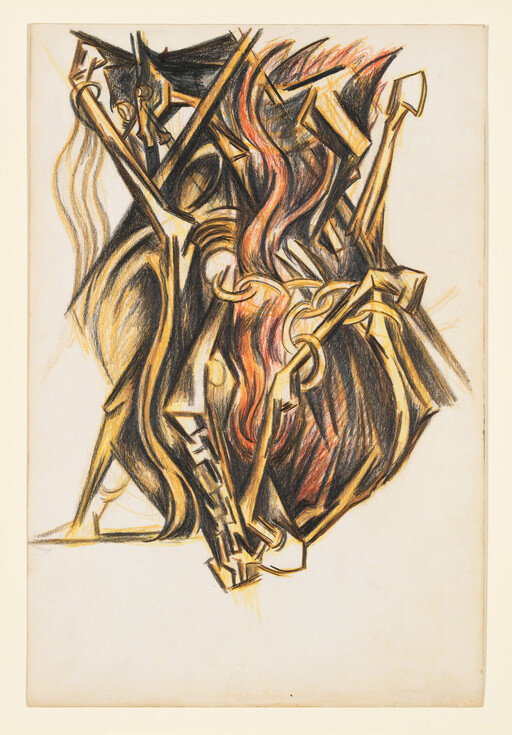
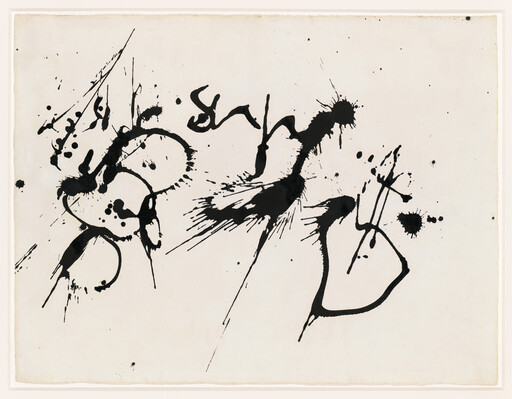
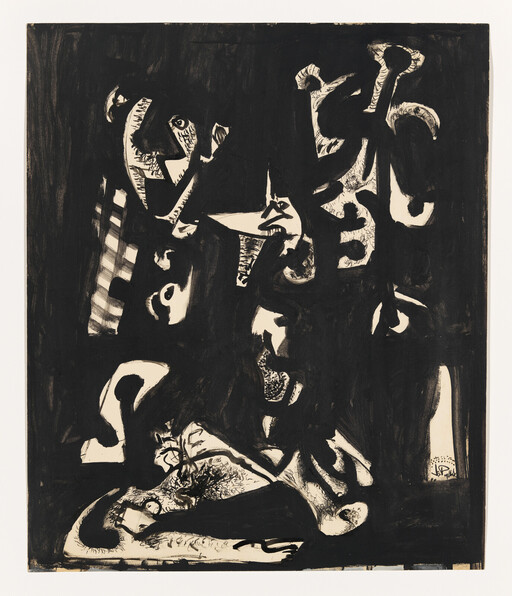
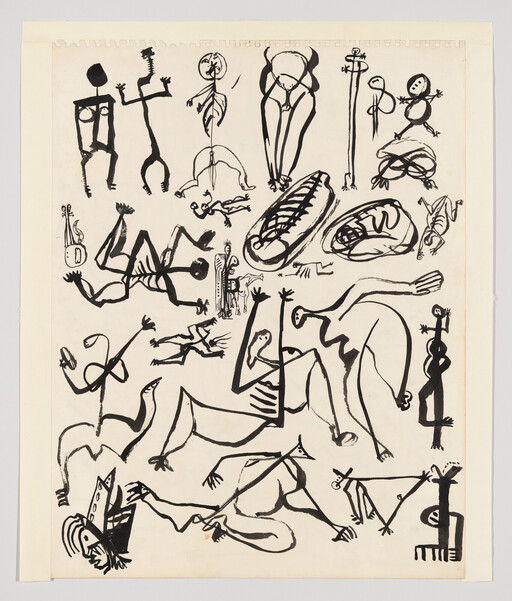
Exhibitions at the Whitney
- Vida Americana: Mexican Muralists Remake American Art, 1925–1945 2020-02-17 – 2021-01-31
- The Whitney’s Collection: Selections from 1900 to 1965 2019-06-28 – 2025-05-01
- The Whitney's Collection 2015-09-28 – 2016-04-04
- America Is Hard to See 2015-05-01 – 2015-09-27
- Shaping a Collection: Five Decades of Gifts 2014-07-17 – 2014-10-19
- Signs & Symbols 2012-06-28 – 2012-10-28
- Collecting Biennials 2010-01-16 – 2010-11-28
- The Whitney’s Collection 2008-01-30 – 2010-01-03
- Modernisms 2007-08-29 – 2008-01-13
- Uncontained 2007-02-08 – 2007-04-29
- Picasso and American Art 2006-09-28 – 2007-01-28
- Full House: Views of the Whitney’s Collection at 75 2006-06-29 – 2006-09-03
- Landscape 2005-03-24 – 2005-09-18
- An American Legacy, A Gift to New York 2002-10-24 – 2003-01-26
- De Kooning to Today: Highlights from the Permanent Collection (2nd floor–Oct 2002) 2002-10-10 – 2003-03-02
- Transitions at Mid-Century, Works on Paper 1945–1955 2002-02-02 – 2002-05-26
- Highlights from the Permanent Collection: From Pollock to Today 2000-12-07 – 2002-02-10
- Highlights from the Permanent Collection: From Hopper to Mid-Century 2000-02-26 – 2006-05-21
- Beat Culture and the New America: 1950-1965 1995-11-09 – 1996-12-29
- Jackson Pollock: Works on Paper from the Permanent Collection 1995-09-13 – 1995-10-23
- In a Classical Vein: Works from the Permanent Collection 1993-10-18 – 1994-04-03
- Jackson Pollock: Psychoanalytic Drawings 1970-10-12 – 1970-11-15
- 1954 Annual Exhibition of Contemporary American Sculpture, Watercolors and Drawings 1954-03-17 – 1954-04-18
- 1953 Annual Exhibition of Contemporary American Painting 1953-10-15 – 1953-12-06
- 1953 Annual Exhibition of Contemporary American Sculpture, Watercolors and Drawings 1953-04-09 – 1953-05-29
- 1952 Annual Exhibition of Contemporary American Sculpture, Watercolors and Drawings 1952-03-13 – 1952-05-04
- 1951 Annual Exhibition of Contemporary American Painting 1951-11-08 – 1952-01-06
- 1951 Annual Exhibition of Contemporary American Sculpture, Watercolors and Drawings 1951-03-17 – 1951-05-06
- 1950 Annual Exhibition of Contemporary American Painting 1950-11-10 – 1950-12-31
- 1949 Annual Exhibition of Contemporary American Painting 1949-12-16 – 1950-02-05
- 1948 Annual Exhibition of Contemporary American Sculpture, Watercolors and Drawings 1948-01-31 – 1948-03-21
- 1947 Annual Exhibition of Contemporary American Painting 1947-12-06 – 1948-01-25
- 1946 Annual Exhibition of Contemporary American Painting 1946-12-10 – 1947-01-16