Artist Biennial
Agnes Martin
1912–2004
Biography
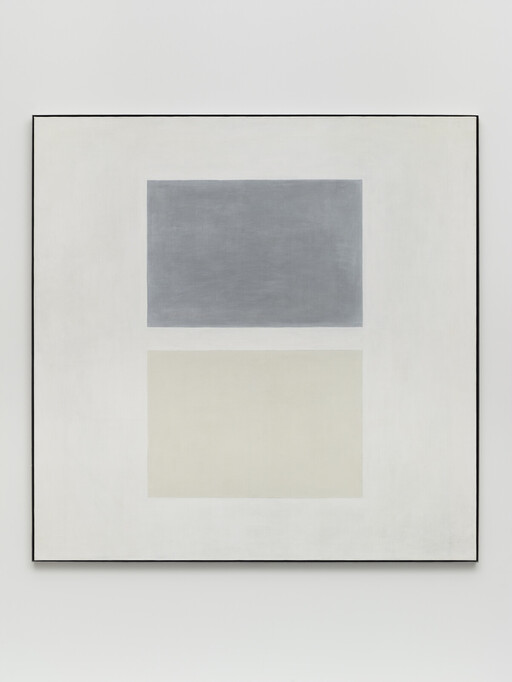
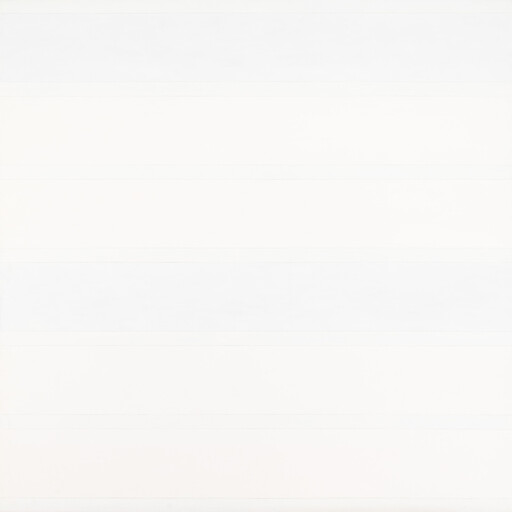
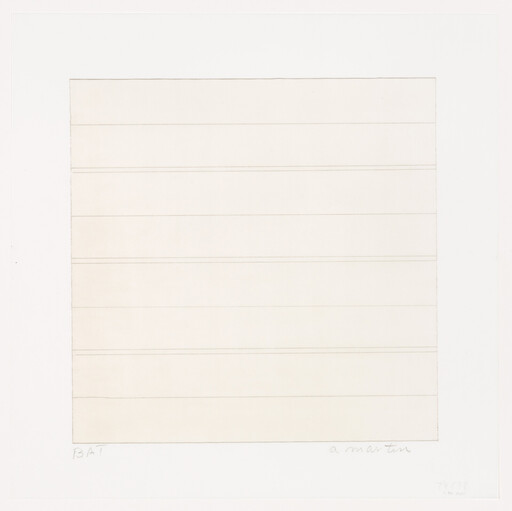
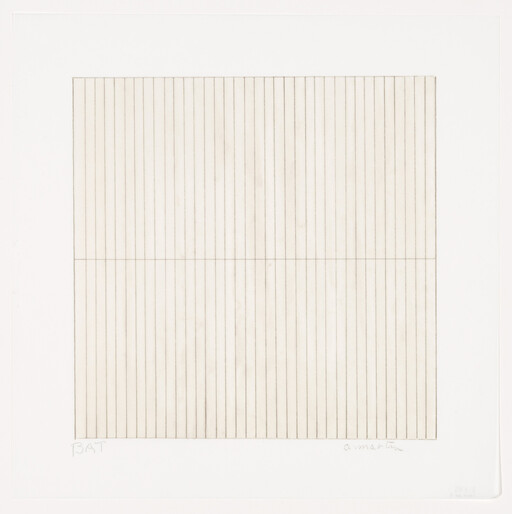
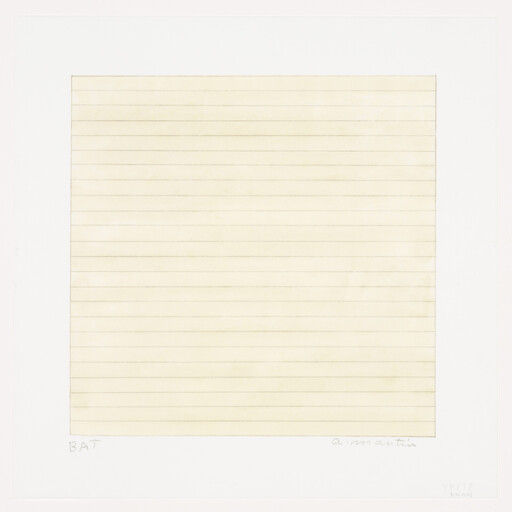
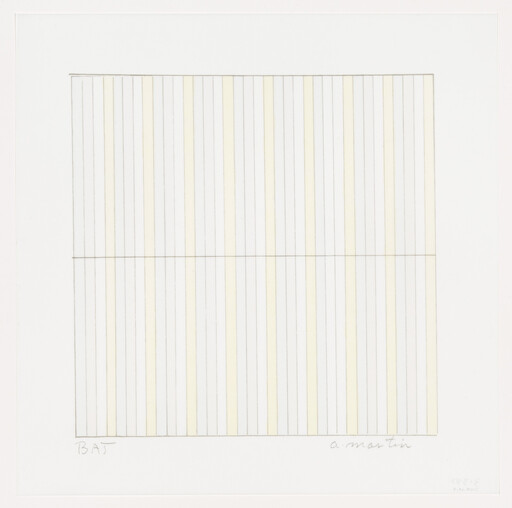
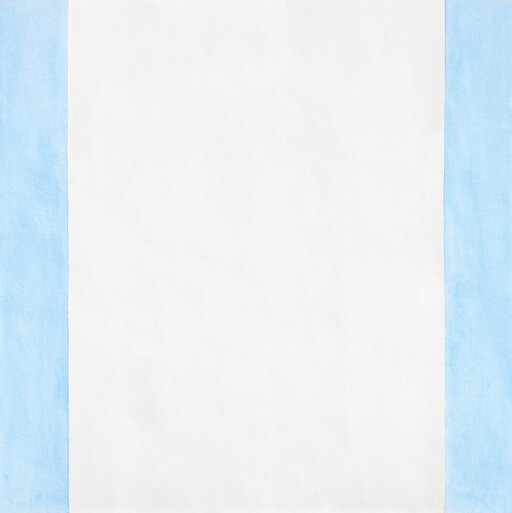
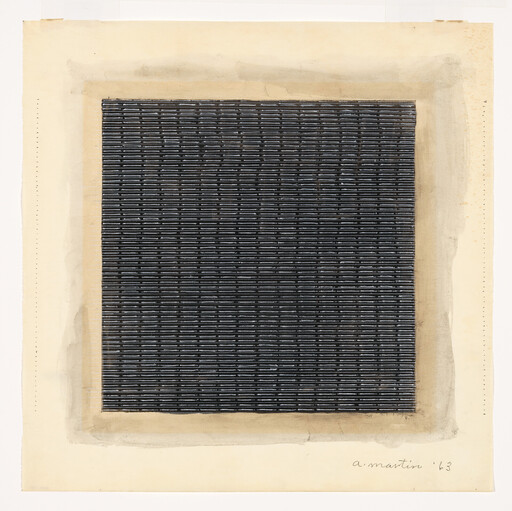
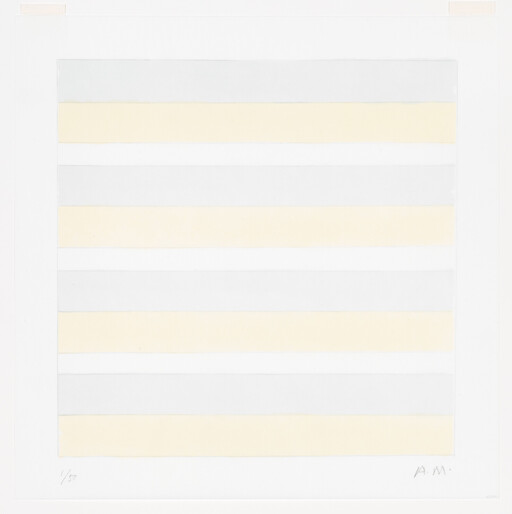
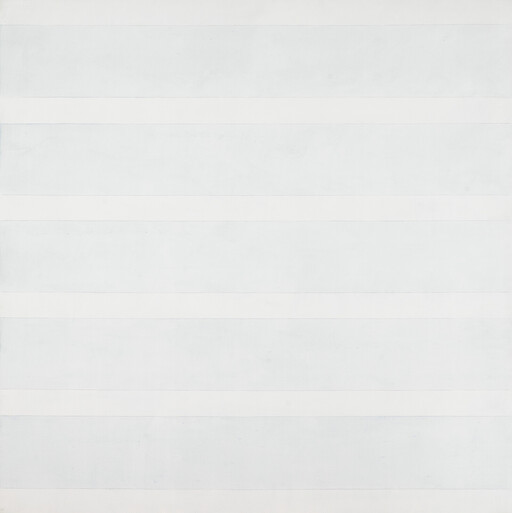
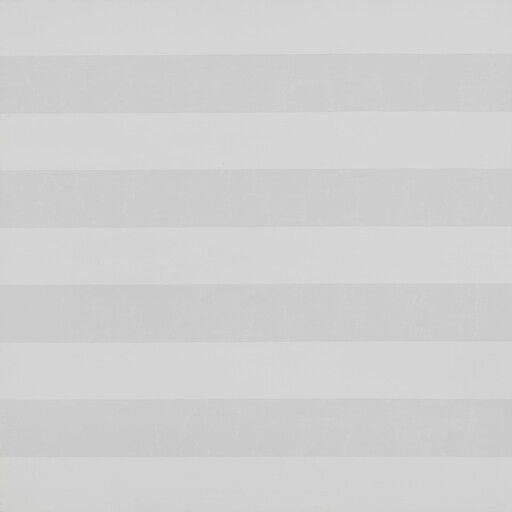
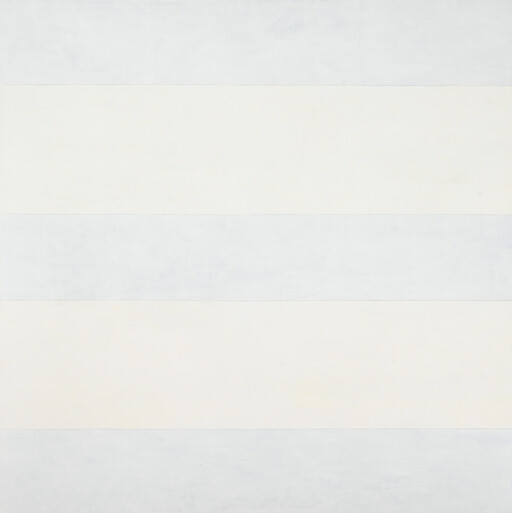
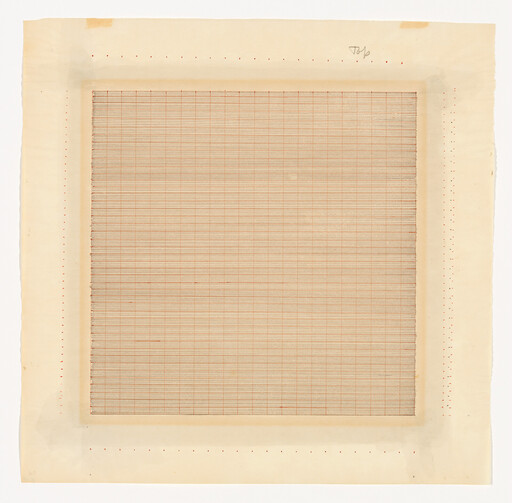
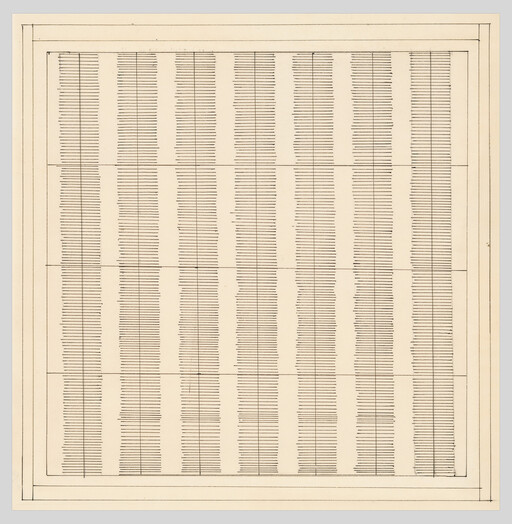
Throughout the more than five decades of her career, Agnes Martin made works using a spare, formal vocabulary and a delicate, subtly variegated palette. Martin was among a vibrant group of artists—including Ellsworth Kelly, Robert Indiana, and James Rosenquist—who settled in the Coenties Slip neighborhood of Manhattan in the late 1950s. Martin established her reputation as one of the foremost abstract artists of the postwar era with six-foot-square canvases delineated with overall grid patterns; in 1967, however, she moved to Taos, New Mexico, and ceased painting until 1974. When she began working again she shifted to compositions of horizontal bands of color defined by graphite lines, a body of work exemplified by The Islands.
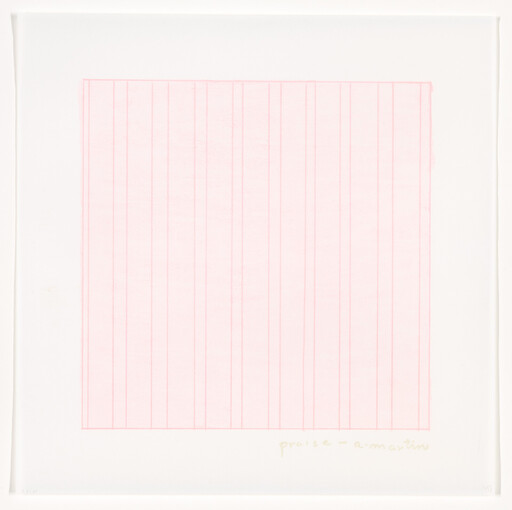
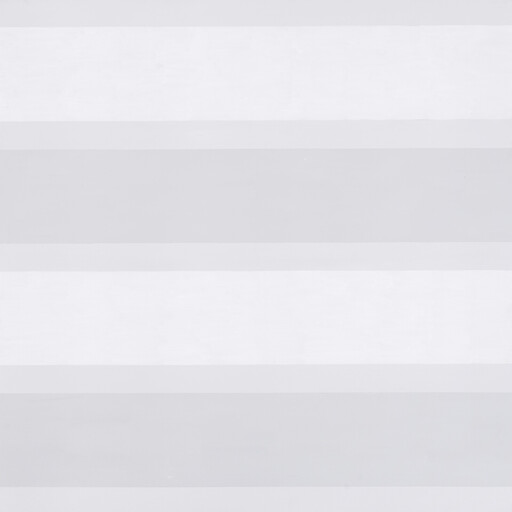
From a distance or in photographs, the twelve pale, identically sized paintings of The Islands appear indistinguishable. As with most of Martin’s works, they are almost impossible to capture accurately in reproduction; the experience of viewing them in person is essential to appreciating and understanding her art. Only then can the variances in the faint graphite markings and the ethereal, horizontal washes of color that differentiate the twelve canvases be noted. Among her most ambitious and monumental works, The Islands envelops viewers in a contemplative environment in which they can become attuned to the sublime qualities of light and atmosphere as well as to their own reactions to the work. While Martin’s commitment to nonobjective painting and her disavowal of ego in art have sometimes led to her association with Minimalism, her work is hardly devoid of expression and emotion. “Everything,” she said, “is about feeling.”
Works in the collection
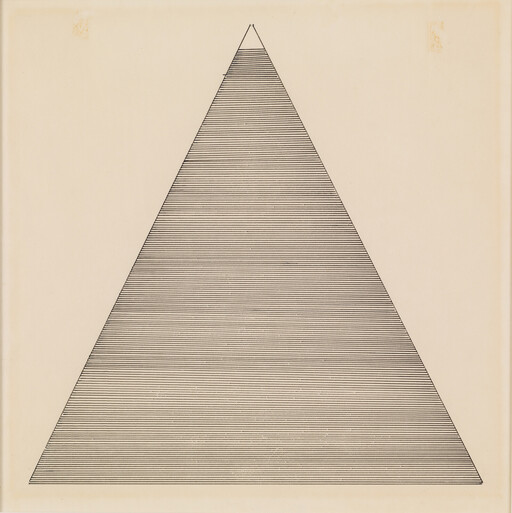
Untitled
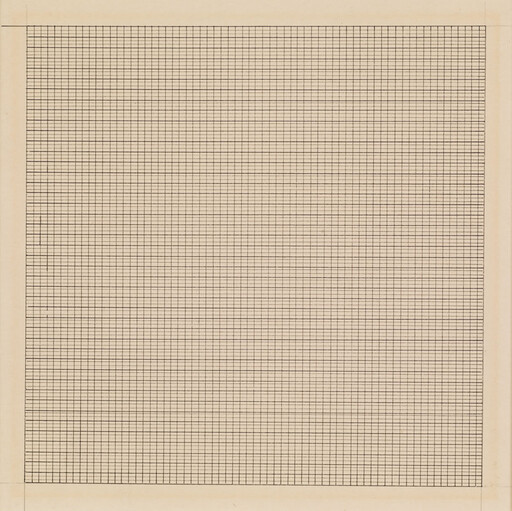
Untitled
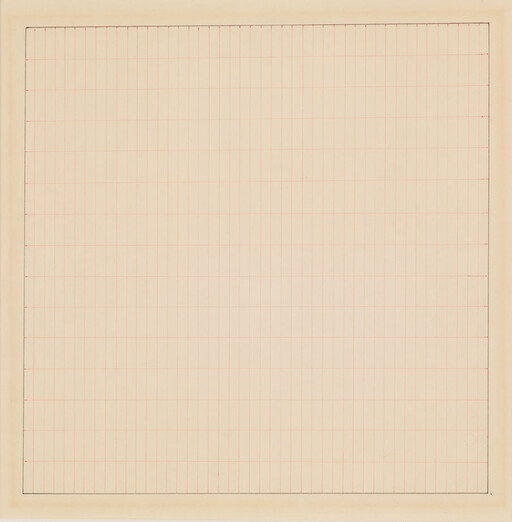
Untitled
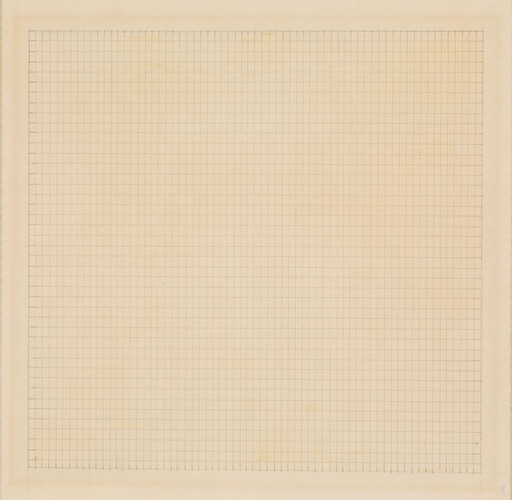
Untitled
This Rain
Gabriel
Untitled #18
Untitled
Untitled
Untitled
Untitled
Untitled
Untitled #22
Untitled
Untitled
Untitled #18
Untitled #5
Untitled #6
The Rubber Stamp Portfolio
Praise
The Islands
Untitled #9
Untitled
Untitled
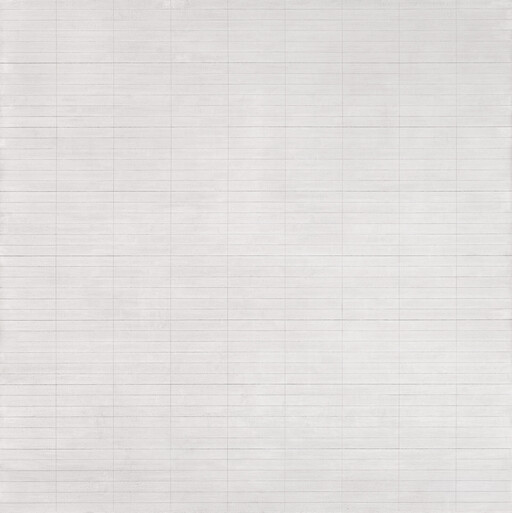
Untitled #11
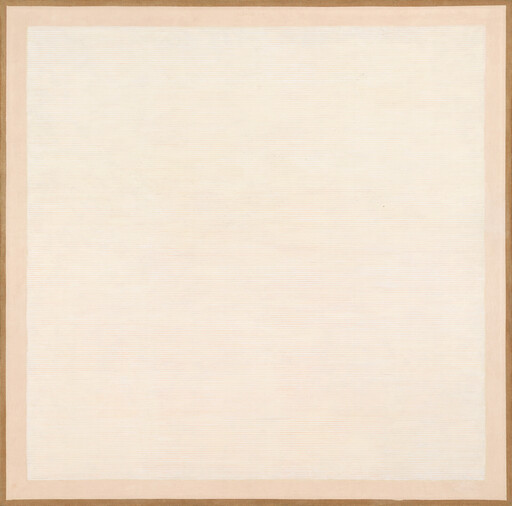
Milk River
Hope
Exhibitions at the Whitney
- Making Knowing: Craft in Art, 1950–2019 2019-11-22 – 2022-02-20
- America Is Hard to See 2015-05-01 – 2015-09-27
- Shaping a Collection: Five Decades of Gifts 2014-07-17 – 2014-10-19
- Legacy: The Emily Fisher Landau Collection 2011-02-10 – 2011-05-01
- Singular Visions 2010-12-16 – 2012-08-05
- Collecting Biennials 2010-01-16 – 2010-11-28
- Full House: Views of the Whitney’s Collection at 75 2006-06-29 – 2006-09-03
- Building and Breaking the Grid: 1962–2002 2005-09-01 – 2006-01-08
- Highlights from the Permanent Collection: From Pollock to Today 2000-12-07 – 2002-02-10
- Lovely Life: The Recent Work of Agnes Martin 2000-10-01 – 2000-10-29
- Heart, Mind, Body, Soul: American Art in the 1990's 1997-11-26 – 1998-01-04
- Whitney Biennial 1995 1995-03-23 – 1995-06-04
- From the Collection: Photography, Sculpture and Painting 1994-07-14 – 1995-02-26
- Agnes Martin 1992-11-06 – 1993-01-31
- Whitney Biennial 1977: Contemporary American Art 1977-02-19 – 1977-04-03
- 1967 Annual Exhibition of Contemporary Painting 1967-12-13 – 1968-02-04
- 1965 Annual Exhibition of Contemporary American Painting 1965-12-08 – 1966-01-30
- Annual Exhibition 1963: Contemporary American Painting 1963-12-11 – 1964-02-02