Artist Biennial On view
Barnett Newman
1905–1970
Biography
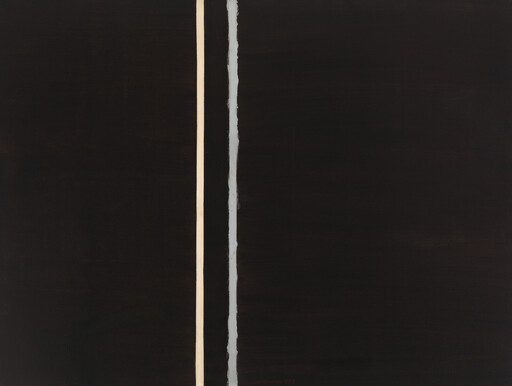
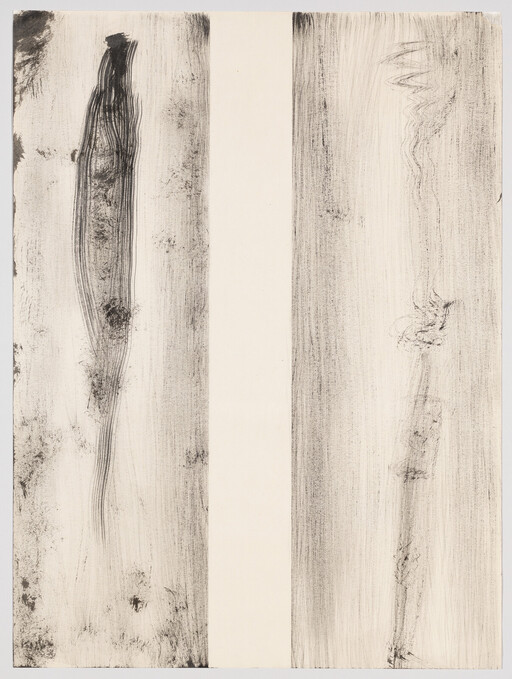
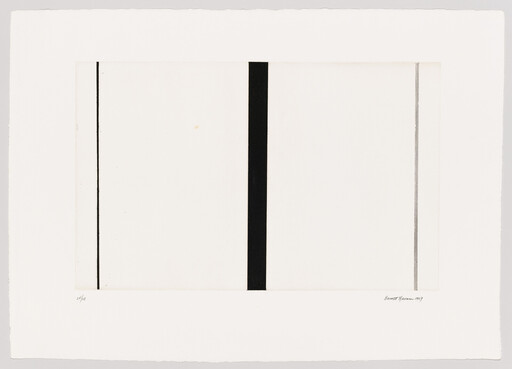
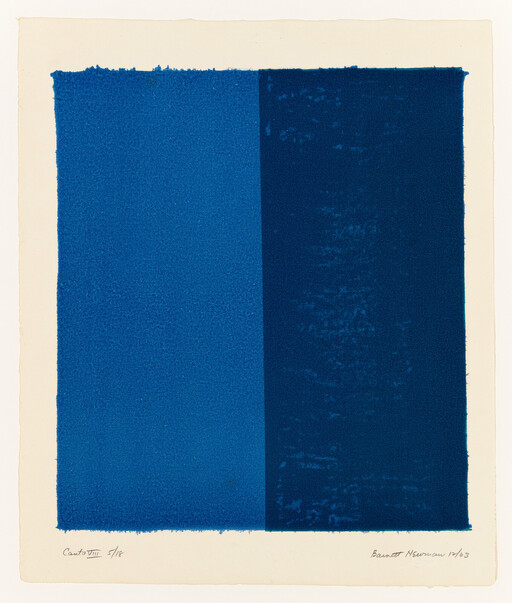
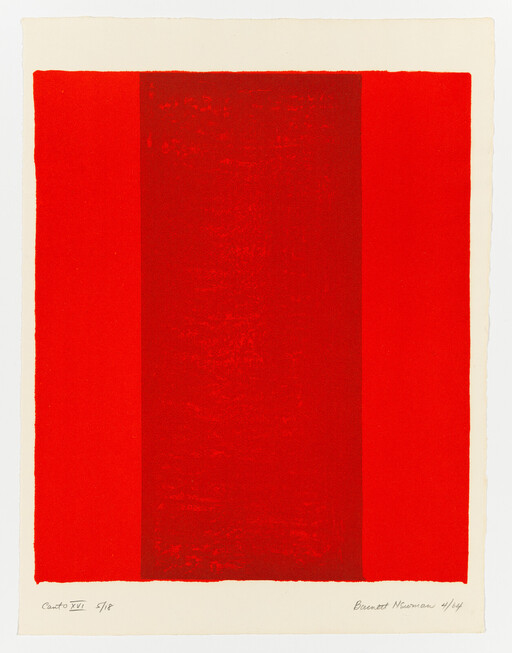
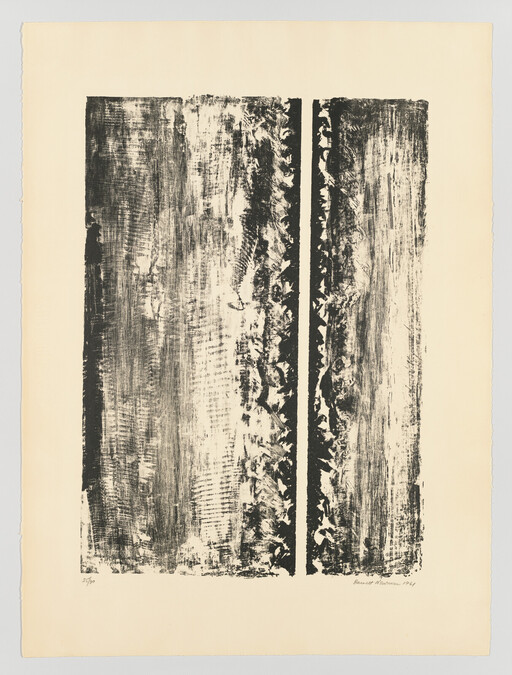
In the aftermath of World War II, Barnett Newman realized that contemporary painting could not adequately respond to the devastation of the Holocaust or the fear of nuclear weapons. Believing that art faced a “moral crisis” and that as a painter he could no longer condone representational imagery, he argued against the kind of painting that previously “was trying to make the world look beautiful.” Concluding in the late 1940s that “the old stuff was . . . no longer meaningful,” he rejected looking to the past for inspiration and decided to “start from scratch as if painting didn’t exist.” His solution was to paint radically reduced, abstract compositions featuring large expanses of color.
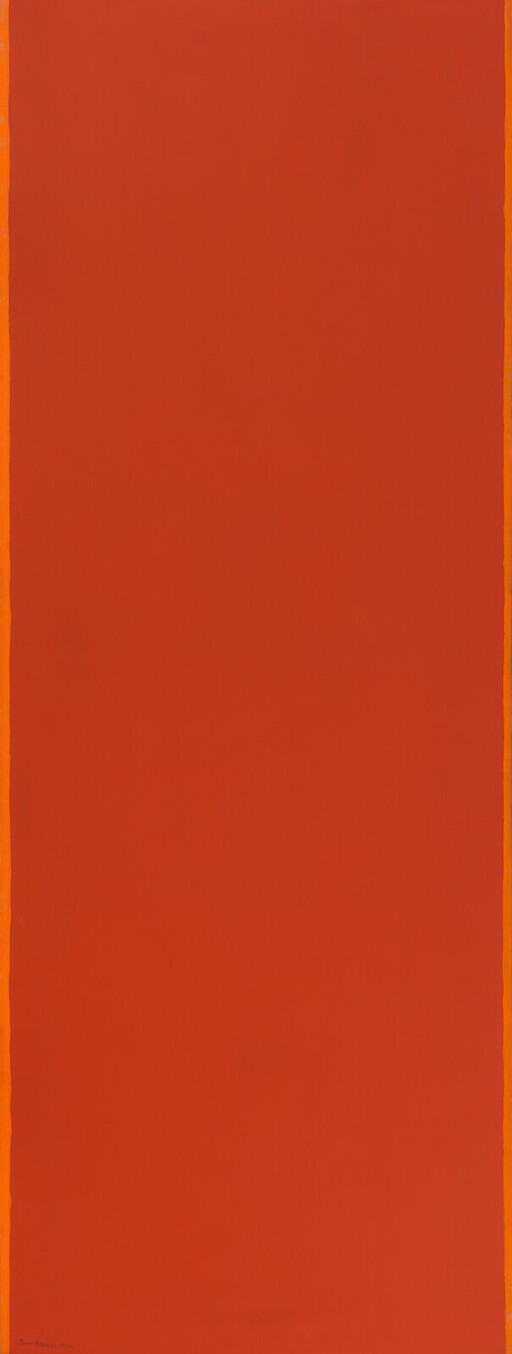
The title of Day One signals a point of departure for painting and for a new world. Newman covered the canvas with a vast red field bordered by two thin vertical bands. He called these signature lines “zips,” painting them freehand or with the help of masking tape. At close range—the distance from which the artist intended his viewers to observe his large works—the painting extends beyond the typical field of vision. Yet by invoking the shared human ability to imagine more than sight apprehends, Newman posits a metaphor for the creative process. He believed that his abstractions communicated a set of moral values because they offered an “assertion of freedom” and a “denial of dogmatic principles.” Ultimately, Day One professes a new beginning, and the hope that humanity might move forward into a better era.
Works in the collection
Exhibitions at the Whitney
- The Whitney’s Collection: Selections from 1900 to 1965 2019-06-28 – 2025-05-01
- Where We Are: Selections from the Whitney’s Collection, 1900–1960 2017-04-28 – 2019-06-02
- The Whitney's Collection 2015-09-28 – 2016-04-04
- America Is Hard to See 2015-05-01 – 2015-09-27
- Shaping a Collection: Five Decades of Gifts 2014-07-17 – 2014-10-19
- Signs & Symbols 2012-06-28 – 2012-10-28
- Collecting Biennials 2010-01-16 – 2010-11-28
- “Progress” 2008-07-11 – 2009-01-04
- Modernisms 2007-08-29 – 2008-01-13
- Full House: Views of the Whitney’s Collection at 75 2006-06-29 – 2006-09-03
- Prints into Drawings 2005-04-14 – 2005-08-28
- Landscape 2005-03-24 – 2005-09-18
- An American Legacy, A Gift to New York 2002-10-24 – 2003-01-26
- Highlights from the Permanent Collection: From Pollock to Today 2000-12-07 – 2002-02-10
- An American Story 1996-03-20 – 1996-09-29
- From the Collection: Photography, Sculpture and Painting 1994-07-14 – 1995-02-26
- In a Classical Vein: Works from the Permanent Collection 1993-10-18 – 1994-04-03
- 1969 Annual Exhibition: Contemporary American Painting 1969-12-16 – 1970-02-01
- 1968 Annual Exhibition: Contemporary American Sculpture 1968-12-17 – 1969-02-09
- 1967 Annual Exhibition of Contemporary Painting 1967-12-13 – 1968-02-04
- Annual Exhibition 1966: Contemporary Sculpture and Prints 1966-12-16 – 1967-02-05
- 1965 Annual Exhibition of Contemporary American Painting 1965-12-08 – 1966-01-30
- Annual Exhibition 1963: Contemporary American Painting 1963-12-11 – 1964-02-02
- 1959 Annual Exhibition of Contemporary American Painting 1959-12-09 – 1960-01-31