Artist Biennial
George Grosz
1893–1959
Biography
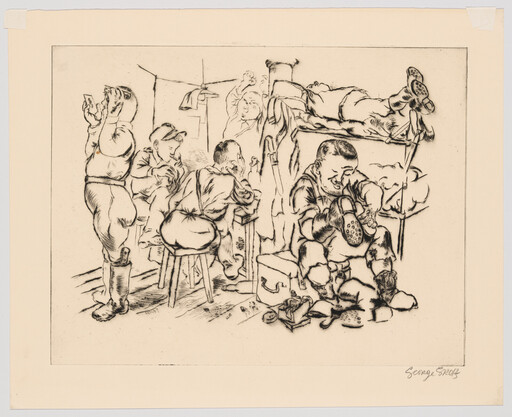
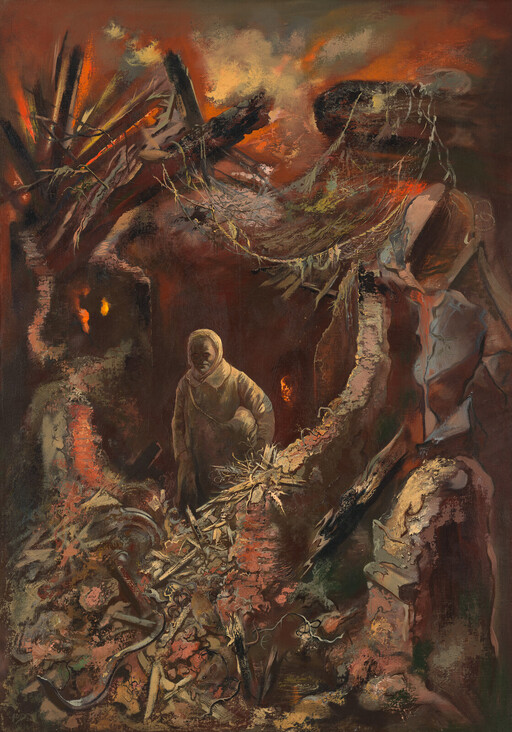
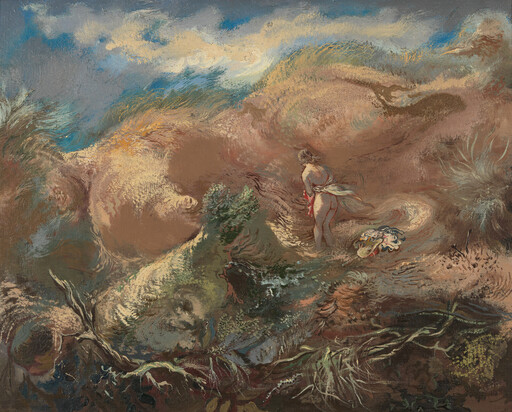
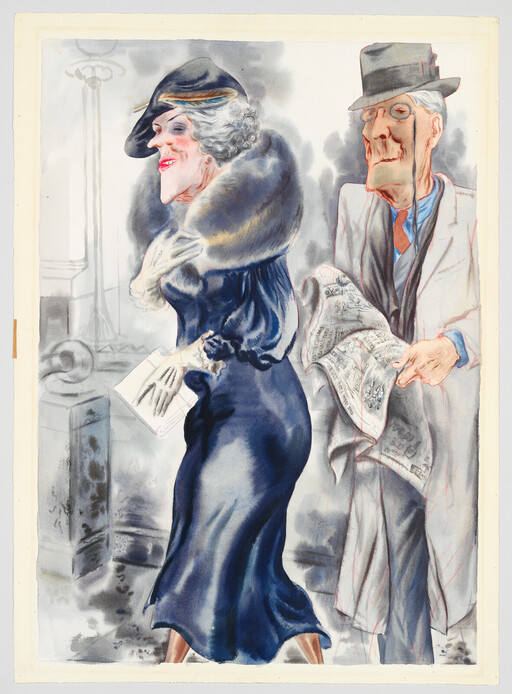
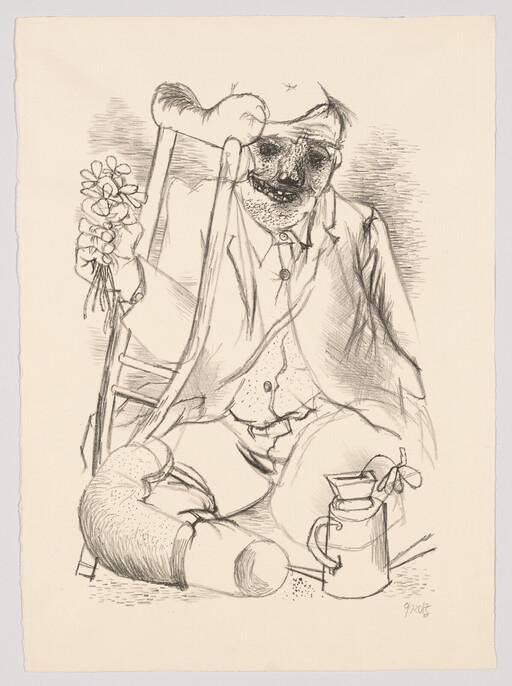
A cofounder of the Berlin Dada movement, George Grosz is primarily known for his work of the 1910s and 1920s, which was motivated by a deep moral commitment to politically engaged art. In drawings, paintings, and printed cartoons, he aimed biting satire at German political classes and bourgeois society, and energetically charted Berlin’s sinister underground. Featured centrally in the Nazis’ Degenerate Art exhibition in 1937, and stripped of his German citizenship in 1938, Grosz watched the Second World War unfold from the United States, to which he had immigrated in 1933.
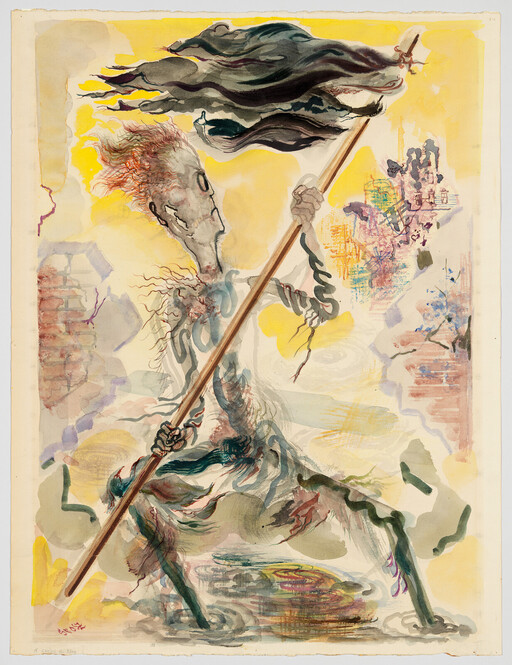
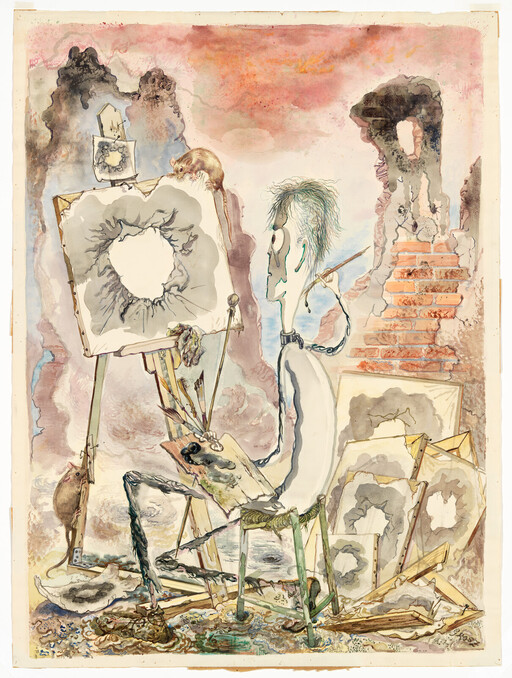
By 1946, when he began the series of watercolors that includes The Painter of the Hole, Grosz’s style and attitude had changed considerably. He described the protagonists of the series in a letter to Bertolt Brecht: “They consist of thin but firm strokes. They cast no shadow, and are themselves completely grey . . . because everything is grey there.” The lanky artist of The Painter of the Hole sits among the ruins of the city that in Grosz’s earlier works had teemed with chaotic life. The destruction of the city is the setting for a more profound sense of loss, however, and the work is as much about art as it is about the physical devastations of war: where once Grosz had been convinced of the political and social potential of art, The Painter of the Hole expresses a weary disillusionment with painting. Despite the numerous attempts piled around his feet, all that the painter can produce is a void in the center of the canvas; its status as garbage is confirmed by the rat nibbling at its corner.
Works in the collection
Exhibitions at the Whitney
- Where We Are: Selections from the Whitney’s Collection, 1900–1960 2017-04-28 – 2019-06-02
- America Is Hard to See 2015-05-01 – 2015-09-27
- Signs & Symbols 2012-06-28 – 2012-10-28
- The Whitney’s Collection 2008-01-30 – 2010-01-03
- Modernisms 2007-08-29 – 2008-01-13
- Collection in Context: 1948 1998-01-16 – 1998-03-15
- 1956 Annual Exhibition of Contemporary American Sculpture, Watercolors and Drawings 1956-04-18 – 1956-06-10
- George Grosz 1954-01-14 – 1954-03-17
- 1952 Annual Exhibition of Contemporary American Sculpture, Watercolors and Drawings 1952-03-13 – 1952-05-04
- 1951 Annual Exhibition of Contemporary American Sculpture, Watercolors and Drawings 1951-03-17 – 1951-05-06
- 1950 Annual Exhibition of Contemporary American Painting 1950-11-10 – 1950-12-31
- 1950 Annual Exhibition of Contemporary American Sculpture, Watercolors and Drawings 1950-04-01 – 1950-05-28
- 1949 Annual Exhibition of Contemporary American Painting 1949-12-16 – 1950-02-05
- 1949 Annual Exhibition of Contemporary American Sculpture, Watercolors and Drawings 1949-04-02 – 1949-05-08
- 1948 Annual Exhibition of Contemporary American Sculpture, Watercolors and Drawings 1948-01-31 – 1948-03-21
- 1947 Annual Exhibition of Contemporary American Sculpture, Watercolors and Drawings 1947-03-11 – 1947-04-17
- 1946 Annual Exhibition of Contemporary American Painting 1946-12-10 – 1947-01-16
- 1946 Annual Exhibition of Contemporary American Sculpture, Watercolors and Drawings 1946-02-05 – 1946-03-13
- 1945 Annual Exhibition of Contemporary American Sculpture, Watercolors and Drawings 1945-01-03 – 1945-02-08
- 1944 Annual Exhibition of Contemporary American Painting 1944-11-14 – 1944-12-12
- 1943 Annual Exhibition of Contemporary American Art 1943-11-23 – 1944-01-04
- 1942 Annual Exhibition of Contemporary American Art 1942-11-24 – 1943-01-06
- 1941 Annual Exhibition of Contemporary American Sculpture, Watercolors, Drawings and Prints 1941-01-15 – 1941-02-19
- 1940 Annual Exhibition of Contemporary American Painting 1940-11-27 – 1941-01-08
- 1940 Annual Exhibition of Contemporary American Art 1940-01-10 – 1940-02-18
- 1939 Annual Exhibition of Contemporary American Sculpture, Drawings and Prints 1939-01-24 – 1939-02-17
- 1938 Annual Exhibition of Contemporary American Painting 1938-11-02 – 1938-12-11
- 1937 Annual Exhibition of Contemporary American Painting 1937-11-10 – 1937-12-12
- Second Biennial Exhibition: Part Two—Watercolors and Pastels 1936-02-18 – 1936-03-18