Artist Biennial
Martin Wong
1946–1999
Biography
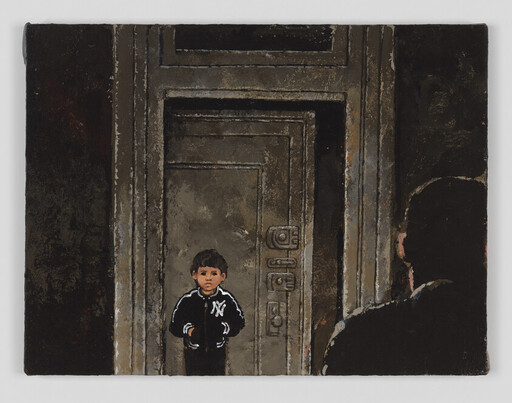
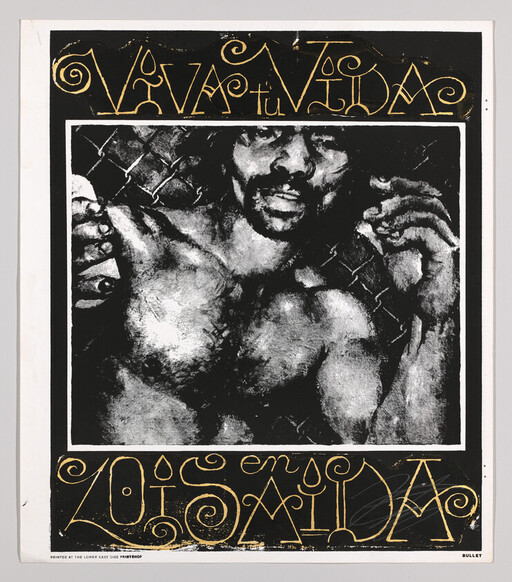
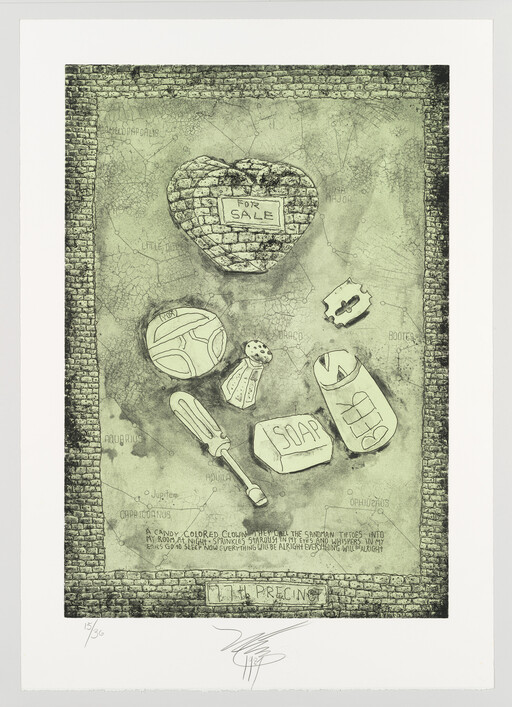
In 1978 Martin Wong moved from California to New York’s Lower East Side, then a vibrant community of predominantly Puerto Rican immigrants and known by its Nuyorican name, “Loisaida.” Raised in San Francisco’s Chinatown district by parents who had themselves immigrated to the United States from China, Wong studied ceramics and participated in experimental performance groups in the San Francisco Bay Area before turning to painting. His canvases, often marked by their earthy palettes, lively social interactions, and brick backdrops, reflected his urban environment and gave visibility to groups underrepresented in both the society and art of the time, including recent immigrants and the gay community (Wong was openly gay). The physical architecture of the neighborhood constantly looms behind this very human subject matter: especially tenement buildings similar to the one Wong himself lived in, whose windows sometimes reveal interior lives and whose walls often bear traces of graffiti.
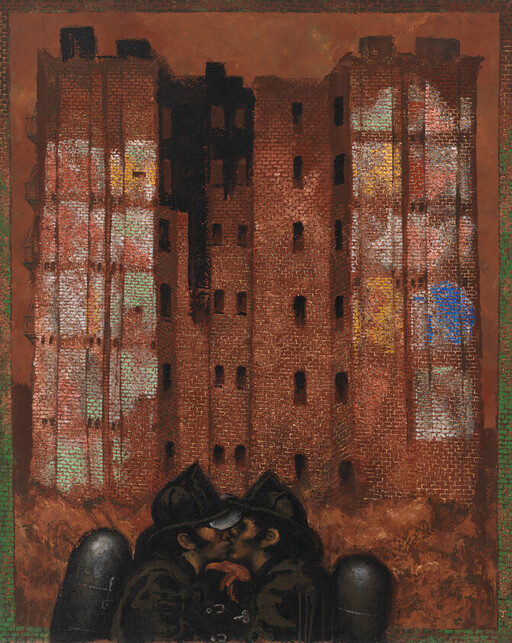
One of Wong’s most iconic works, Big Heat presents a profound meditation on both the ravages and poignancies of life. In the foreground two firemen—an ongoing fascination of the artist’s—share a tender kiss as the specter of a massive, partially charred tenement building looms in the background. The building is embellished with bright patches of paint used to buff over graffiti, an urban, vernacular art form that Wong supported and collected in earnest. Wong nourished graffiti artists by buying their work, and shortly after he tested positive for HIV he donated his extensive collection of graffiti art to the Museum of the City of New York.
Works in the collection
Exhibitions at the Whitney
- Shifting Landscapes 2024-11-01 – 2026-01-25
- Around Day’s End: Downtown New York, 1970–1986 2020-09-03 – 2020-11-01
- An Incomplete History of Protest: Selections from the Whitney’s Collection, 1940–2017 2017-08-18 – 2018-08-27
- Fast Forward: Painting from the 1980s 2017-01-27 – 2017-05-14
- America Is Hard to See 2015-05-01 – 2015-09-27
- Shaping a Collection: Five Decades of Gifts 2014-07-17 – 2014-10-19
- Whitney Biennial 2014 2014-03-07 – 2014-05-25
- I, YOU, WE 2013-04-25 – 2013-09-01
- Blues for Smoke 2013-02-07 – 2013-04-28
- De Kooning to Today: Highlights from the Permanent Collection (2nd floor–Oct 2002) 2002-10-10 – 2003-03-02
- Highlights from the Permanent Collection: From Pollock to Today 2000-12-07 – 2002-02-10