Artist Biennial
Kara Walker
1969–
Biography
Since rising to prominence in the mid-1990s, Kara Walker has used silhouette cutouts as a signature element in her large-scale tableaux and projections. Yet her appropriation of this popular nineteenth-century portrait technique diverges starkly from its genteel roots. Drawing on sources that include American slave narratives, the literature of the antebellum South, and minstrel shows, her works examine racist and sexist stereotypes as well as issues of identity, narrative representation, violence, and desire. Walker has likened placing the viewer in the center of these historical retellings to “creating a monster that swallows you.”
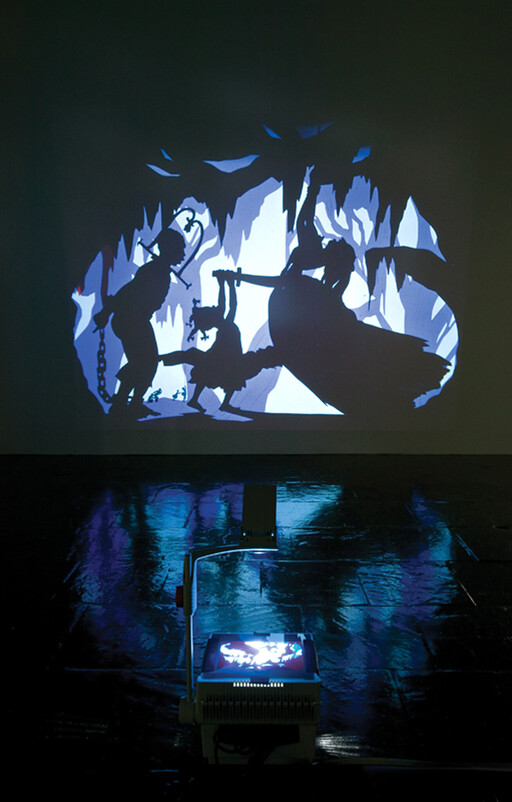
In Mistress Demanded Swift and Dramatic Empathetic Reaction Which We Obliged Her, paper cutouts and colored gels are cast from an overhead projector onto the wall of a dark room. The images call to mind historical attractions such as shadow puppetry and silent-era animation techniques pioneered by German artist Lotte Reiniger. Instead of fairy tales, however, Walker’s projection reveals a gruesome scene in which a small African American girl plunges a machete into the abdomen of a bound “mistress.” An onlooker’s head is trapped in a grotesque metal contraption, and his hands and feet are in shackles. Although the scene seemingly represents a slave rebellion or escape, nothing in it suggests redemption. Rather, Walker’s hard-hitting depictions aim to confront us with imagery that, as she has put it, undermines “all our fine-tuned, well-adjusted cultural beliefs.”
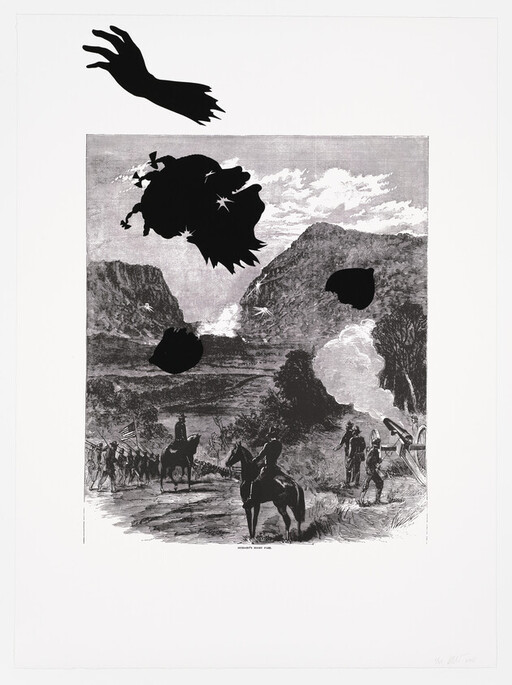
Each of the fifteen prints in her portfolio Harper’s Pictorial History of the Civil War (Annotated), features a lithographic enlargement of an illustration from a popular history book published by Harper’s Weekly in 1866 that Walker has “annotated” with screenprinted silhouettes. The placement and contours of the silhouettes often highlight particular elements of the original imagery. Exodus of Confederates from Atlanta features a silhouette outline within a silhouette that calls attention to an African American boy piling up belongings for white civilian evacuees. In Alabama Loyalists Greeting the Federal Gun-Boats, an oversized silhouette of a woman becomes part of the action; she appears to have been knocked down by Union supporters rushing to greet the northern warships. Although Walker’s interventions obscure much of the detail in the source imagery, they foreground an African American presence that had been minimized or ignored in the originals, underscoring an ongoing bias in popular media representations of newsworthy events. As she has explained, “as long as there are people saying ‘Hey, you don’t belong here’ to others, it only seems realistic to continue investigating the terrain of racism.”
Dana Miller and Adam D. Weinberg, Handbook of the Collection (New York: Whitney Museum of American Art, 2015), 392–393.
Works in the collection
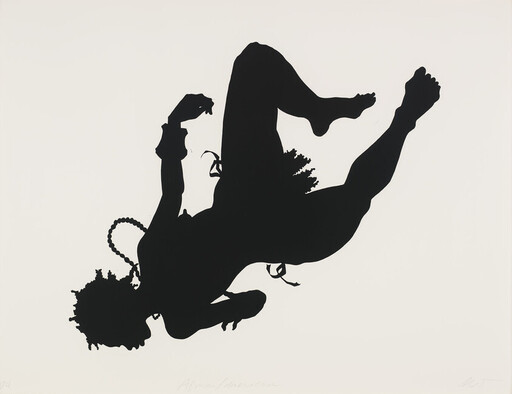
African/American
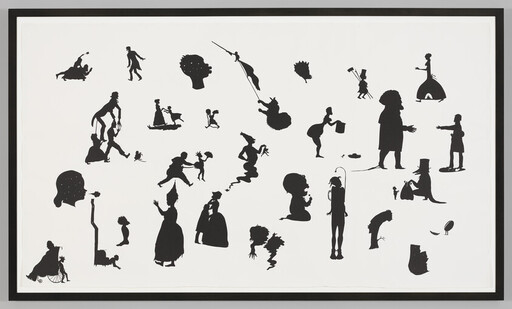
Untitled
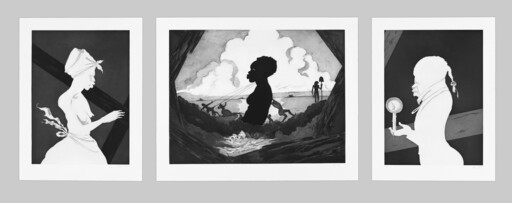
Resurrection Story with Patrons
SkowheganBOX no. 1
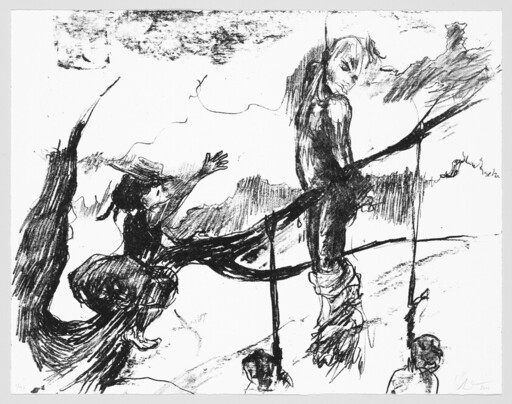
Sketch for a Fabulous Tale
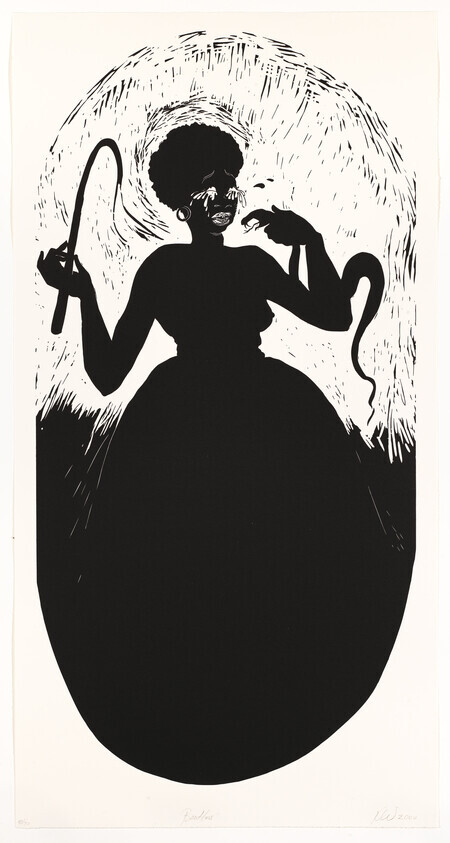
Boo-Hoo
An Unpeopled Land in Uncharted Waters
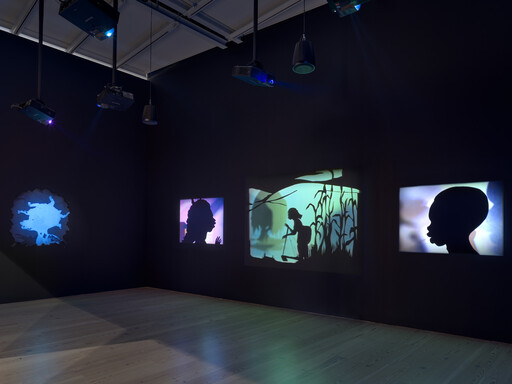
" ...calling to me from the angry surface of some grey and threatening sea. I was transported."
Harper's Pictoral History of the Civil War (Annotated)
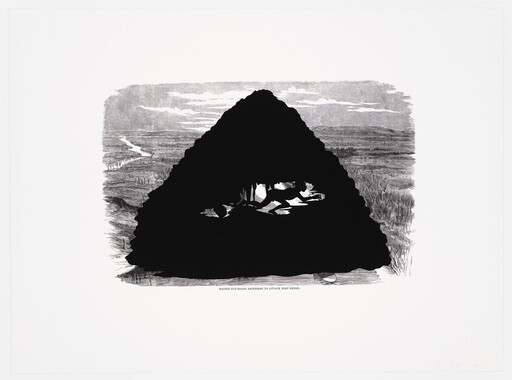
Foote's Gun-Boats Ascending to Attack Fort Henry
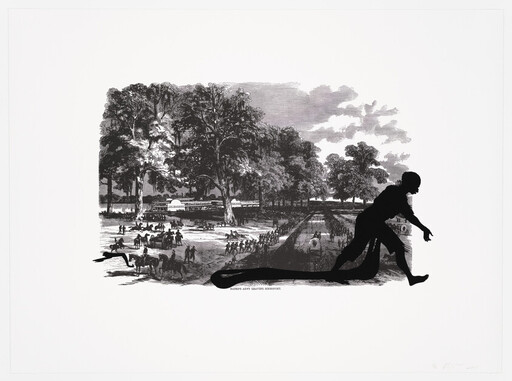
Banks's Army Leaving Simmsport
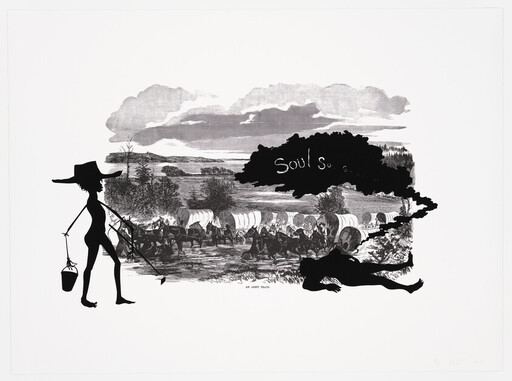
An Army Train
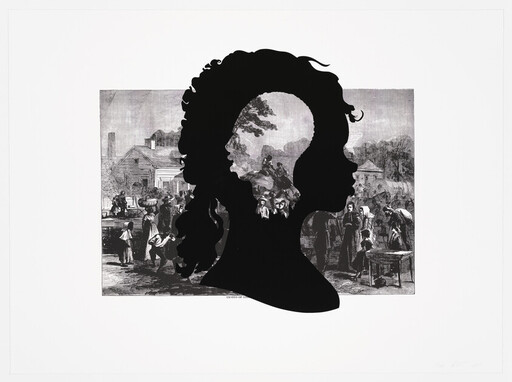
Exodus of Confederates From Atlanta
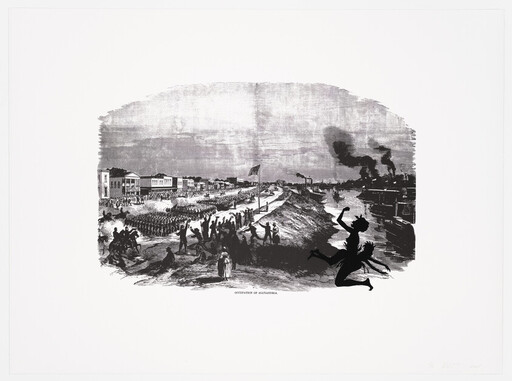
Occupation of Alexandria
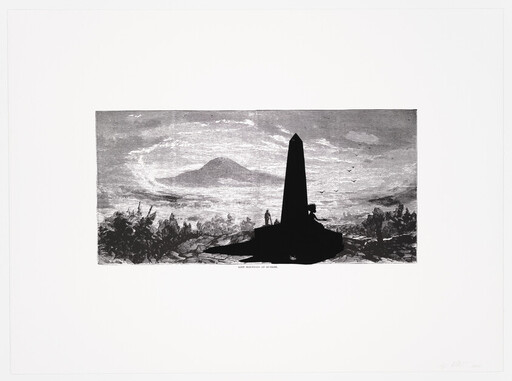
Lost Mountain at Sunrise
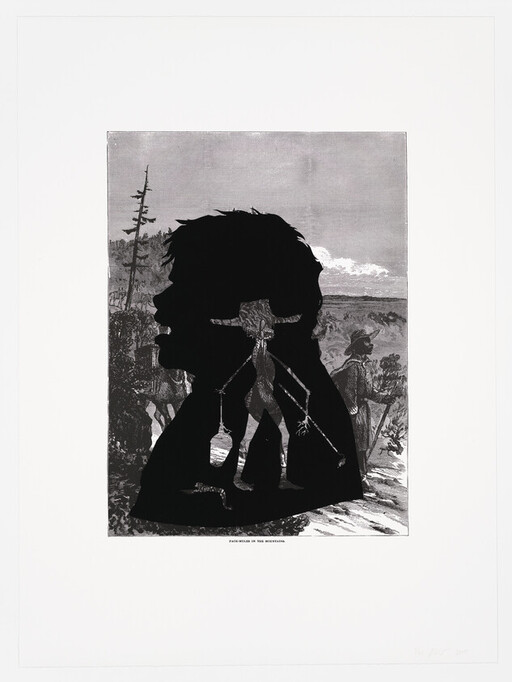
Pack-Mules in the Mountains
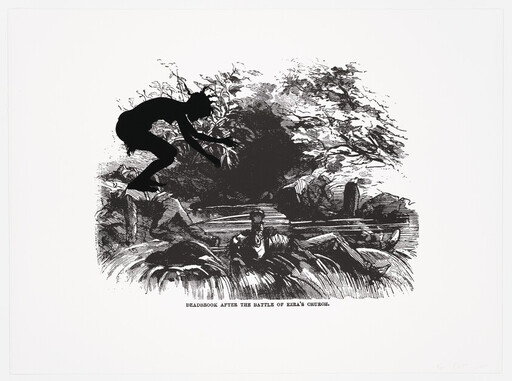
Deadbrook after the Battle of Ezra's Church
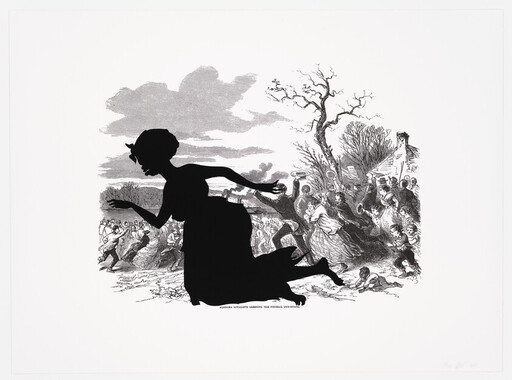
Alabama Loyalists Greeting the Federal Gun-Boats
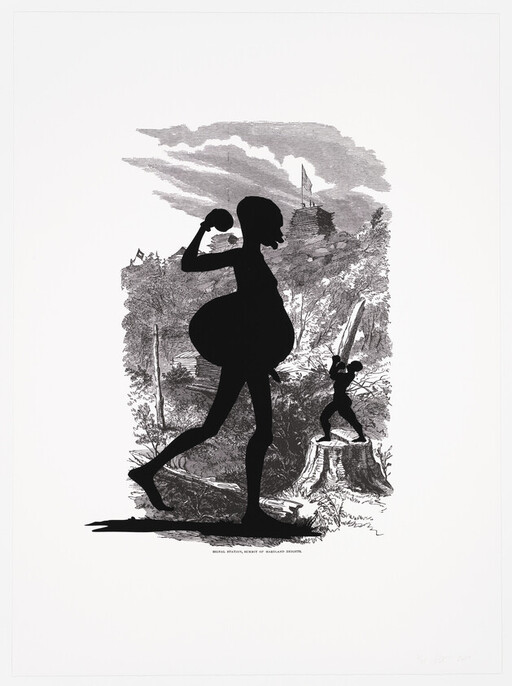
Signal Station, Summit of Maryland Heights
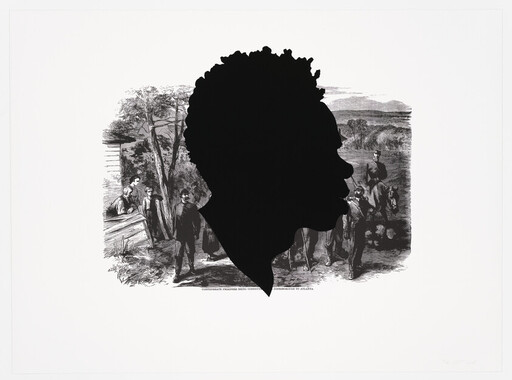
Confederate Prisoners Being Conducted From Jonesborough to Atlanta
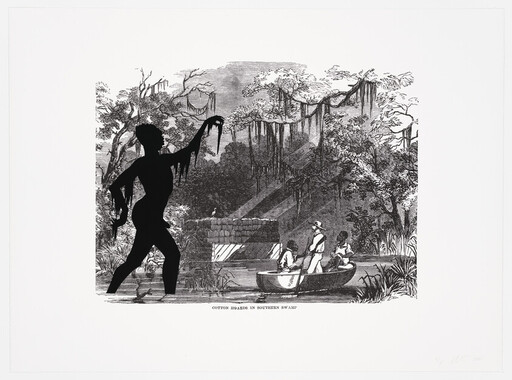
Cotton Hoards in Southern Swamp
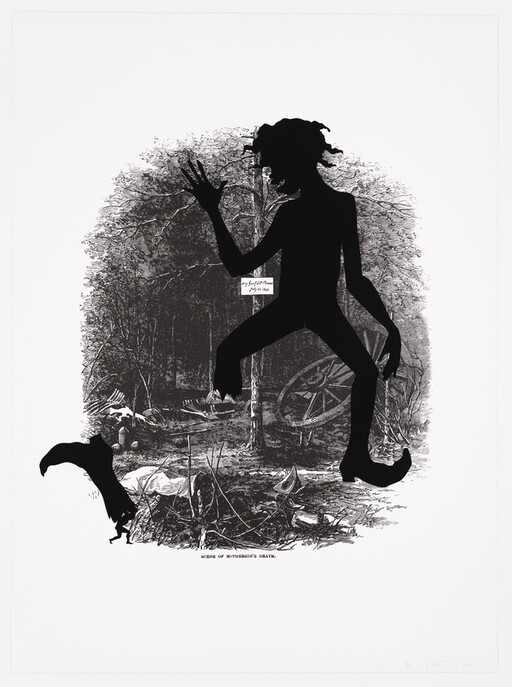
Scene of McPherson's Death
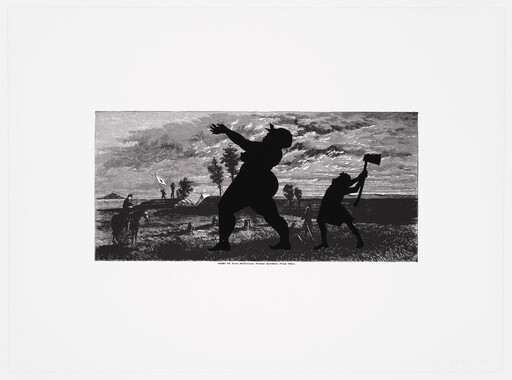
Crest of Pine Mountain, Where General Polk Fell
Buzzard's Roost Pass
Negress Note (Aunt Dicey)
Mistress Demanded Swift and Dramatic Empathetic Reaction Which We Obliged Her
Camptown
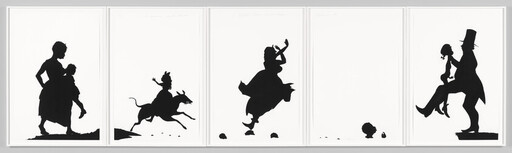
A Means to An End... A Shadow Drama in Five Acts
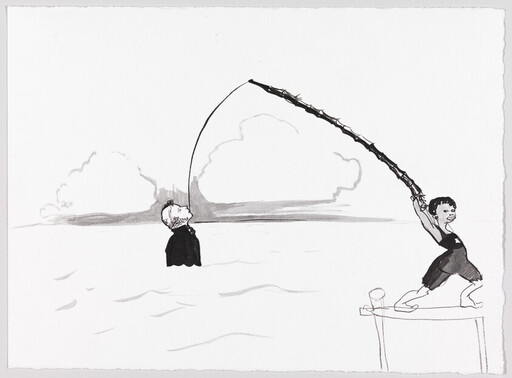
Untitled (Black Boy Fishing a White Man)
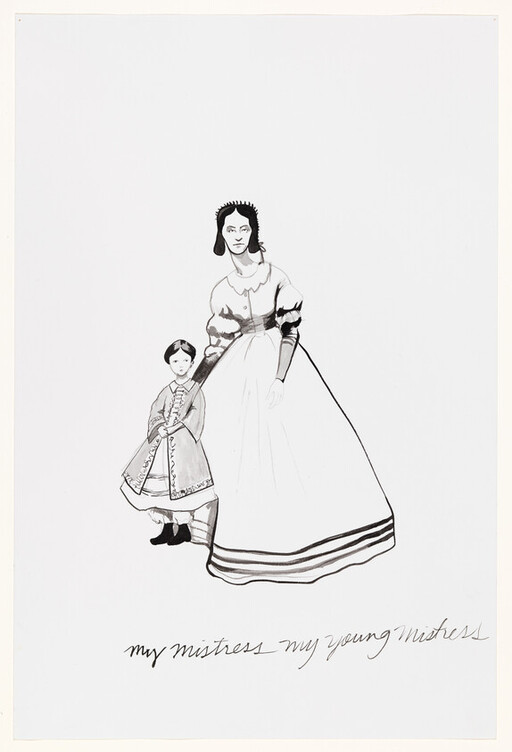
My mistress my young mistress
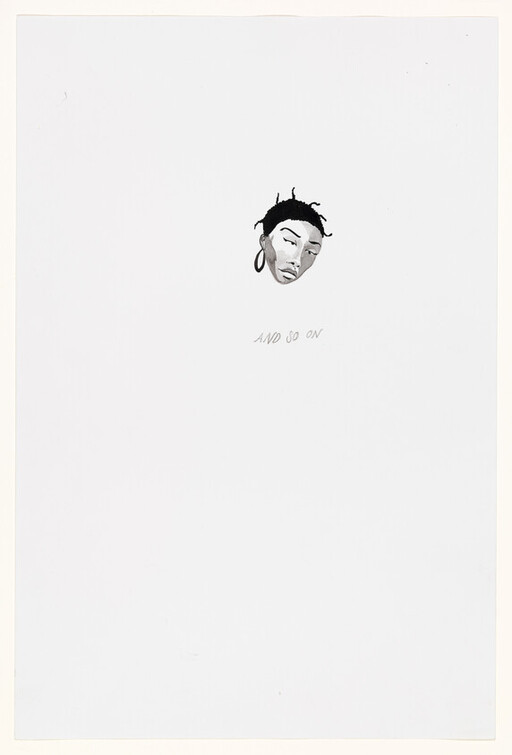
And So On
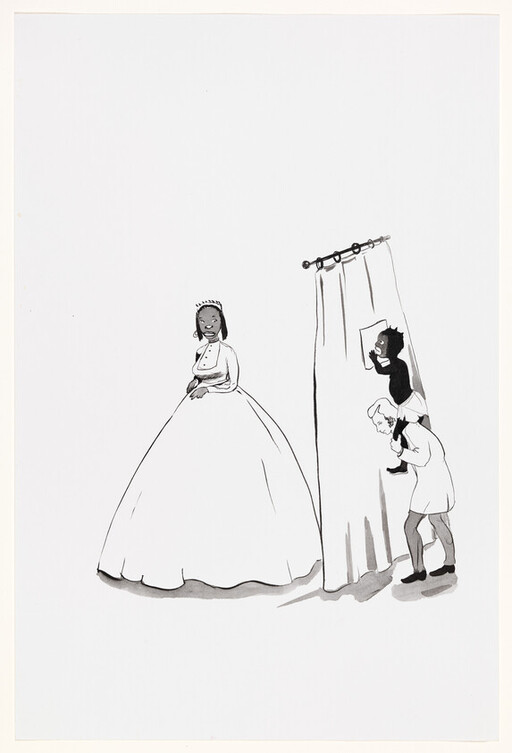
Untitled (Black Woman with Big Skirt)
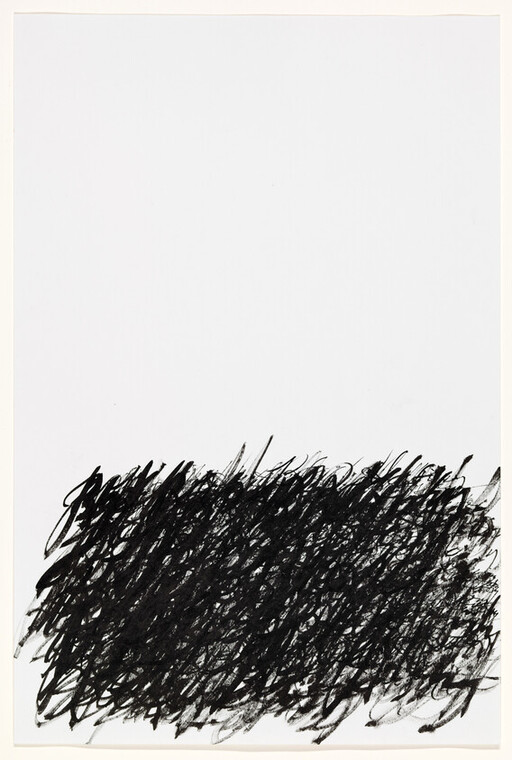
re-writing Black History, 400 years of bondage, 25 years of Boredom
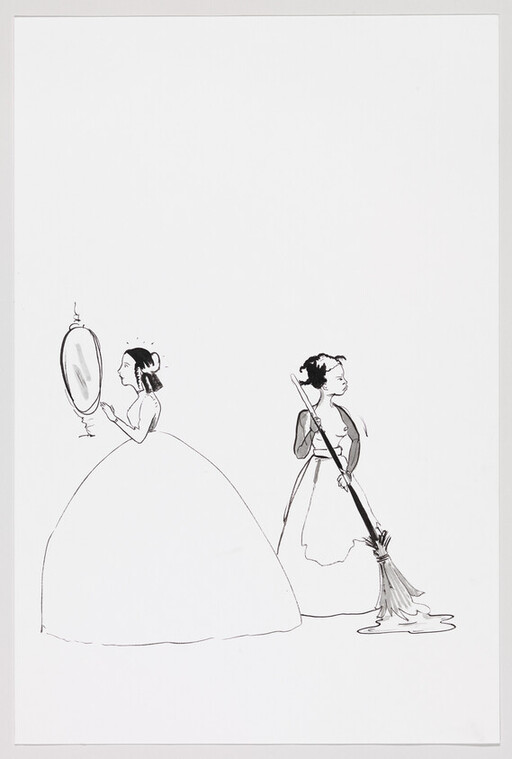
Untitled (White Woman Looking in Mirror)
Exhibitions at the Whitney
- Edges of Ailey 2024-09-25 – 2025-02-09
- Inheritance 2023-06-28 – 2024-02-04
- Jason Moran 2019-09-20 – 2020-01-05
- An Incomplete History of Protest: Selections from the Whitney’s Collection, 1940–2017 2017-08-18 – 2018-08-27
- America Is Hard to See 2015-05-01 – 2015-09-27
- Blues for Smoke 2013-02-07 – 2013-04-28
- Whitney Biennial 2012 2012-03-01 – 2012-05-27
- Kara Walker: My Complement, My Enemy, My Oppressor, My Love 2007-10-11 – 2008-02-03
- Down by Law 2006-01-21 – 2006-05-21
- New Additions: Prints for an American Museum Part I 2003-10-31 – 2004-01-25
- Heart, Mind, Body, Soul: American Art in the 1990's 1997-11-26 – 1998-01-04
- Whitney Biennial 1997 1997-03-20 – 1997-06-01