Artist Biennial
Nancy Spero
1926–2009
Biography
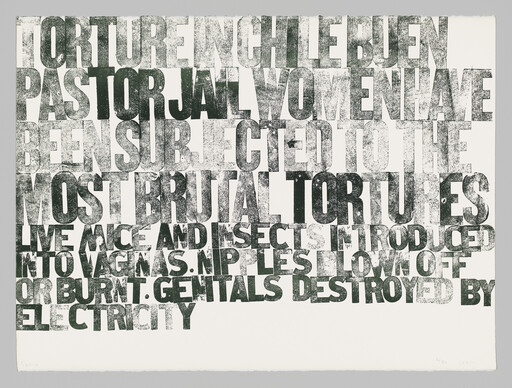
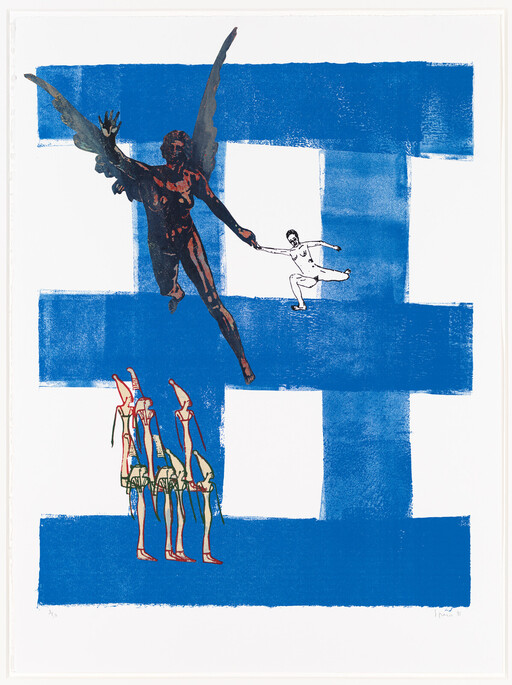
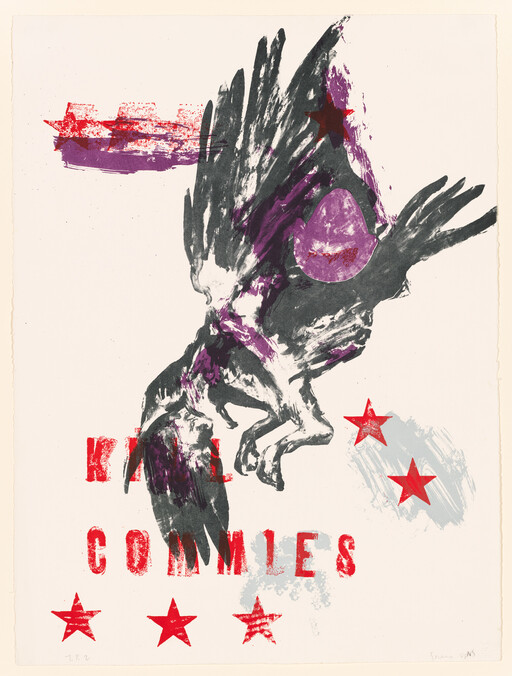
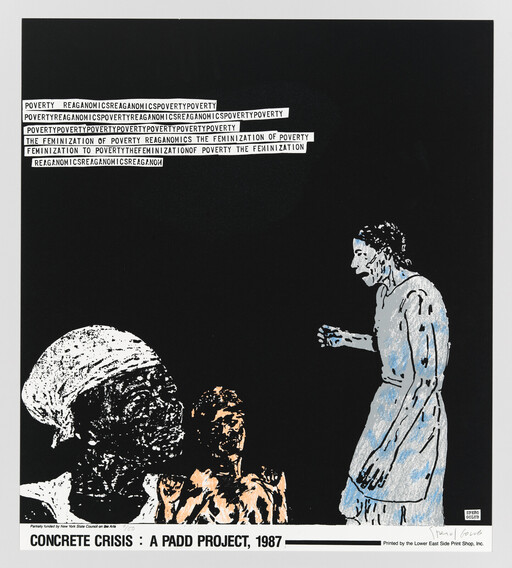
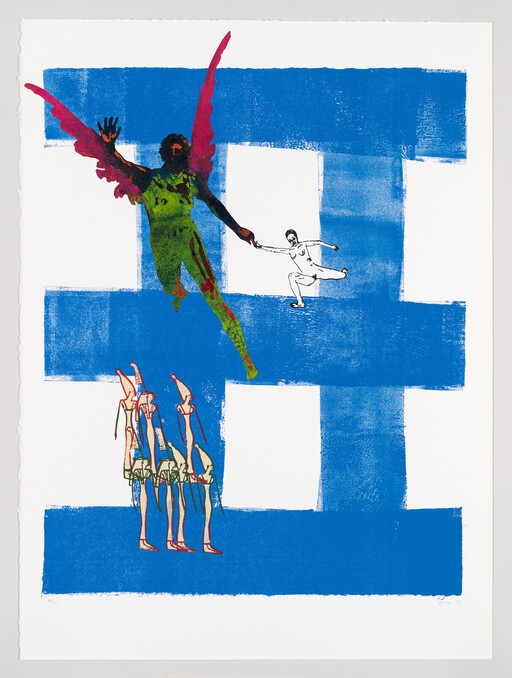
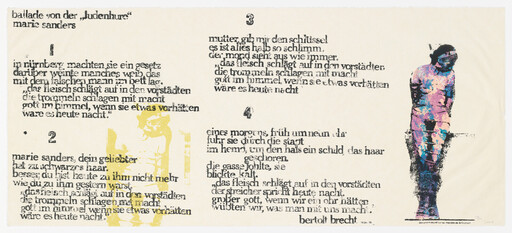
Nancy Spero’s distinctive form of politically engaged art combines a wide-ranging social and cultural critique with craft-based techniques, historical references, poetic and personal text, and a loose figurative style. Trained at the Art Institute of Chicago and the École des Beaux-Arts in Paris, Spero began to produce work that was pointedly political in 1965, in the midst of the Vietnam War. By the end of the 1960s she had also become active in the Art Workers Coalition and Women Artists in Revolution, groups that protested the discriminatory practices of New York cultural institutions. Throughout the 1970s, Spero’s work increasingly reflected feminist concerns, portraying the protagonists of history with female figures, or referencing personal experience through text-based compositions.
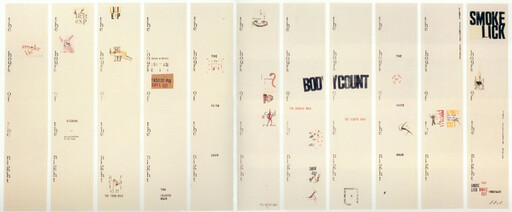
Hours of the Night—comprising eleven nine-foot-high, hand-printed and collaged paper panels—is a textual work that recalls a manuscript or scroll, though it eludes linear reading. Phrases such as shoot out and body count suggest the violence and grim political climate that followed the United States’ withdrawal from Vietnam in 1973. Textual fragments such as smoke lick and knife cut hint at more personal events: a fire that damaged Spero’s New York apartment the year the work was made, and a stabbing that injured her husband, the artist Leon Golub. Hours of the Night might suggest a catalogue of night terrors or racing thoughts, but Spero described the piece in more optimistic terms. The work, she stated, was inspired by the Ancient Egyptian Book of the Dead, in which the sun god Ra “travels the underworld each night, but emerges triumphant at dawn each day. This continual battle affirms the future—and the celebration of life.”
Works in the collection
Exhibitions at the Whitney
- Sixties Surreal 2025-09-24 – 2026-01-19
- An Incomplete History of Protest: Selections from the Whitney’s Collection, 1940–2017 2017-08-18 – 2018-08-27
- Fast Forward: Painting from the 1980s 2017-01-27 – 2017-05-14
- I, YOU, WE 2013-04-25 – 2013-09-01
- The Whitney’s Collection 2008-01-30 – 2010-01-03
- Two Years 2007-10-17 – 2008-02-17
- Whitney Biennial 1993 1993-03-04 – 1993-06-20