Artist Biennial
Lorna Simpson
1960–
Biography
After receiving a BFA from the School of Visual Arts, New York, and an MFA from the University of California, San Diego, Lorna Simpson began in the mid-1980s to produce works combining photographs and text that draw on aspects of Conceptual art to consider themes of race, gender, and identity. Although they engage broader contexts of historical memory and visual culture, Simpson’s photo-text tableaux resist easy explication, relying instead on viewers’ interpretations to untangle their enigmatic syntheses of image and language.
2 Tracks, for example, seems to set forth a narrative in its juxtaposition of a photograph of the shoulders and close-cropped head of an African American woman, seen from the back; a pair of flanking photographs of long braids of black hair; and the words back and track, on accompanying plaques. But the relationship between these components remains unclear. The words have literal correlates (the subject’s back and the tracklike braids), but the phrase backtrack, with its connotations of reversal and regression, provokes consideration of additional meanings as African American hair, a favored motif of the artist’s, takes on loaded significance. Simpson frequently pictures her subjects from behind or crops or fragments her images—challenging the presumed objectivity of the photographic medium— and she often invokes systems of counting, indexing, or classification only to violate the order of these typologies. Both formal strategies heighten the ambiguity of her combinations of photographs and text.
In the 1990s Simpson began creating large-scale, multipanel photographic works on felt. Her practice in recent years furthers her examination of contemporary identity in the mediums of drawing, film, and video.
Works in the collection
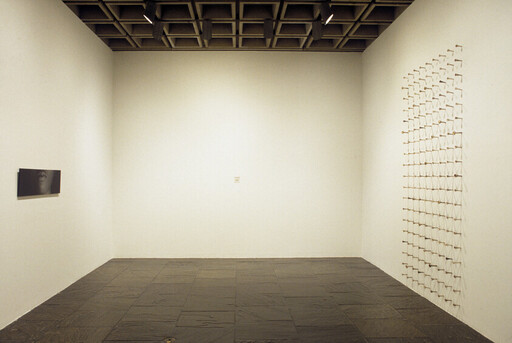
Hypothetical?
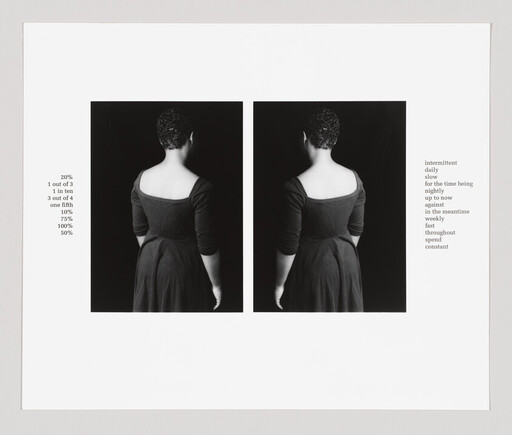
Partitions & Time
"In a dream ..."
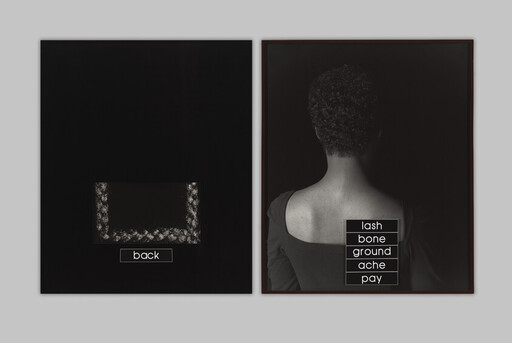
Outline
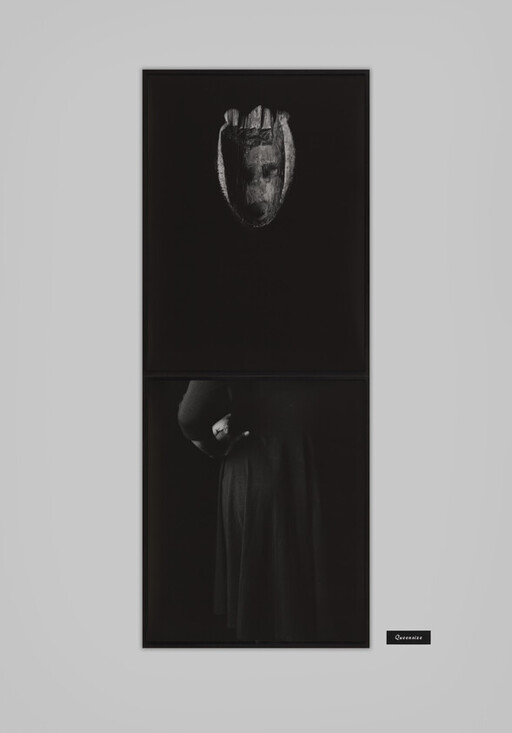
Queensize
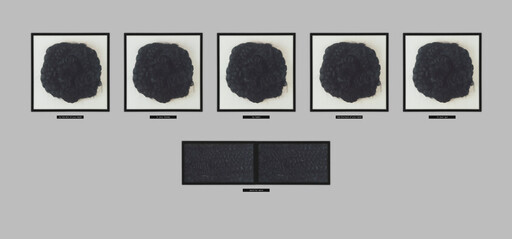
Untitled
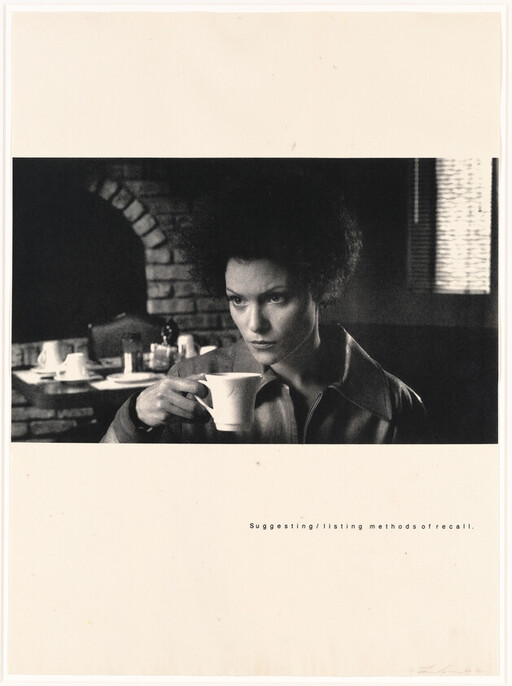
Recall
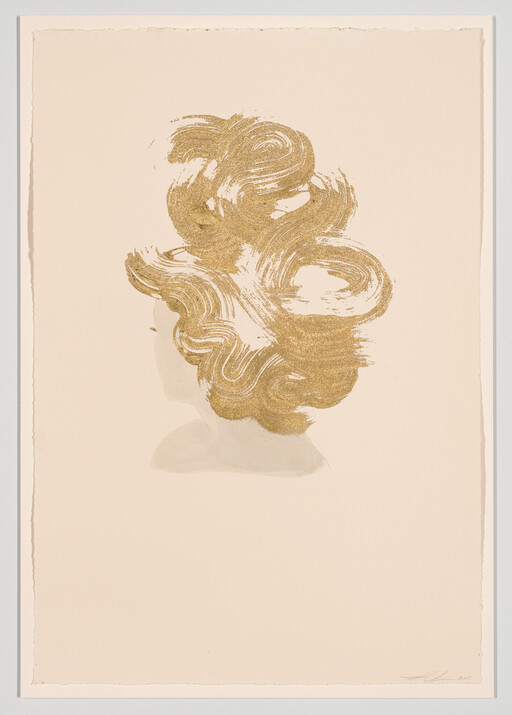
Gold Head K
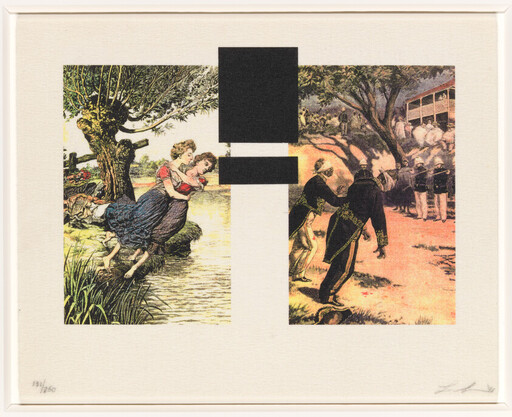
Untitled
9 Props
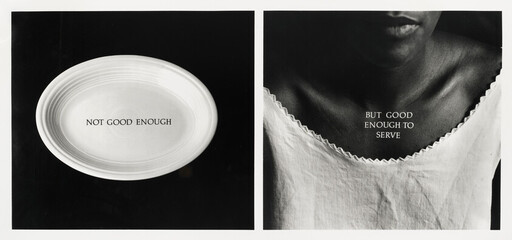
C-Rations
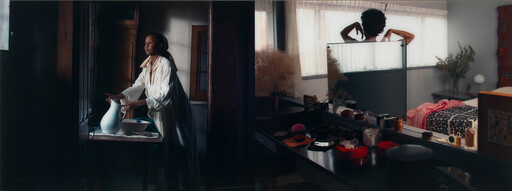
Corridor
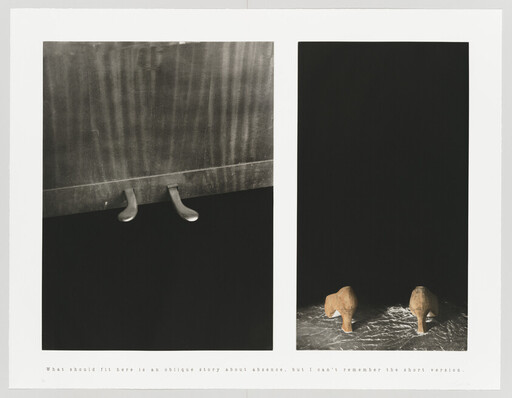
Untitled [What Should Fit Here Is An Oblique Story...]
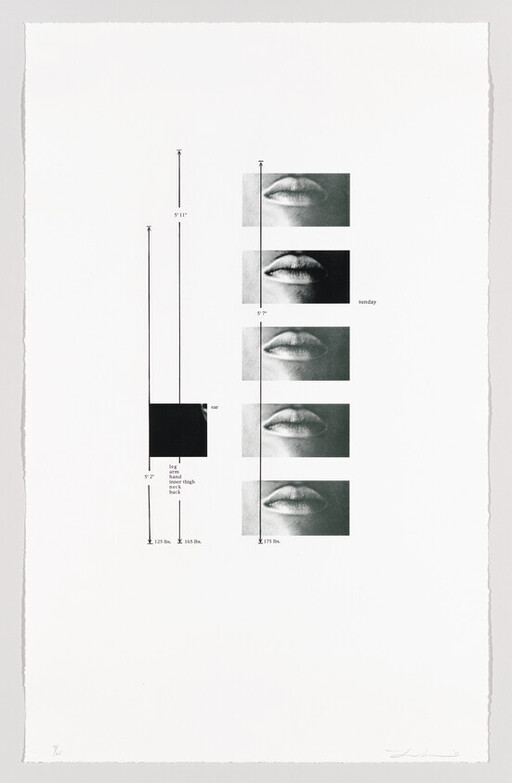
Untitled
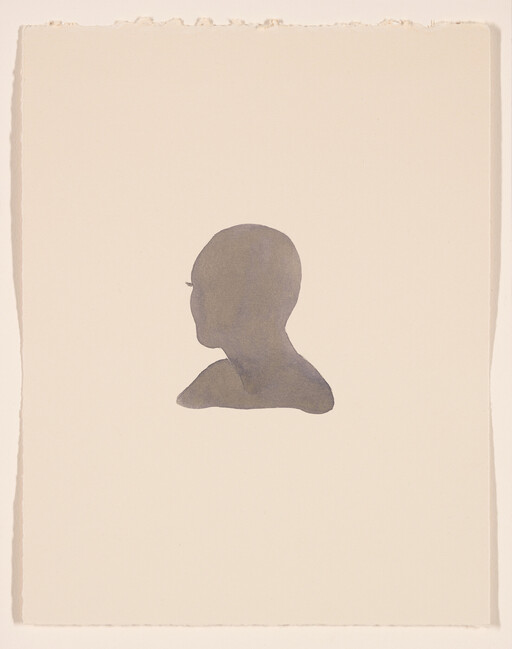
Head 1K
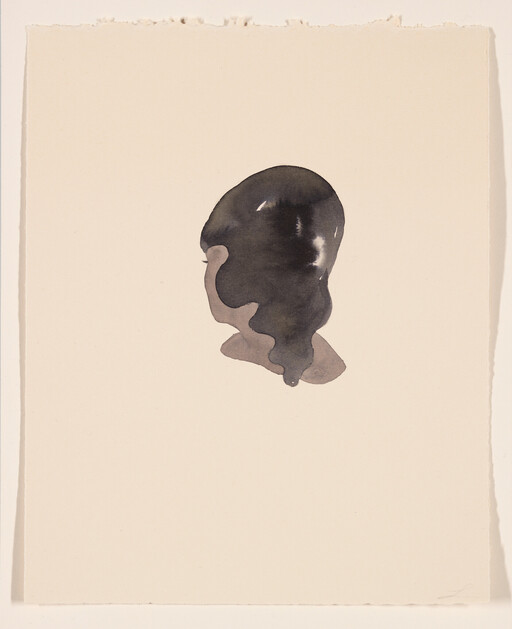
Head 3M
Printed Matter Photography Portfolio 1. Portraits
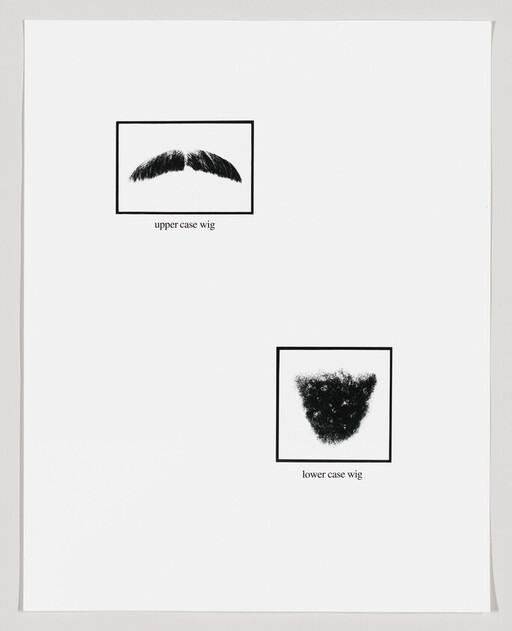
Untitled (Upper-case and Lower-case wigs)
Details
Portrait
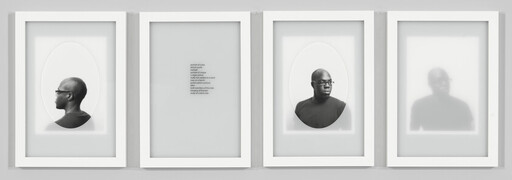
Study
Exit 8: Exit Art Portfolio 1998
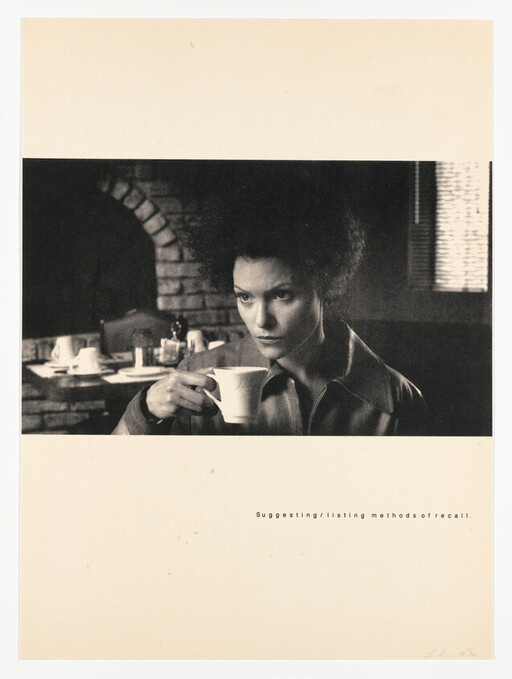
Recall
1993 Whitney Biennial in Seoul
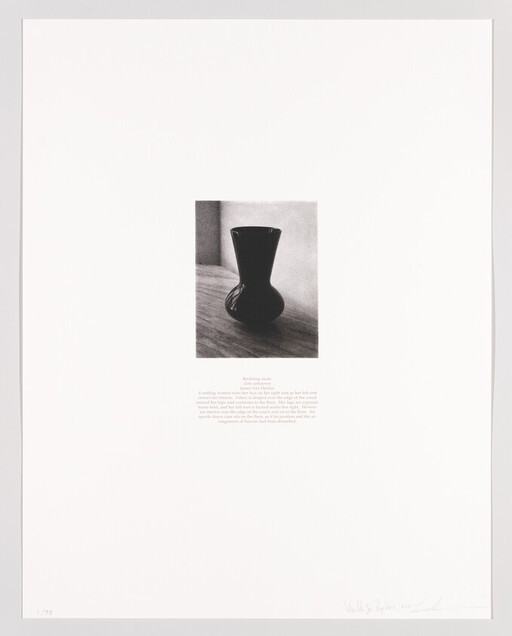
Van Der Zee Prop Vase
The S.A.F.E. Portfolio
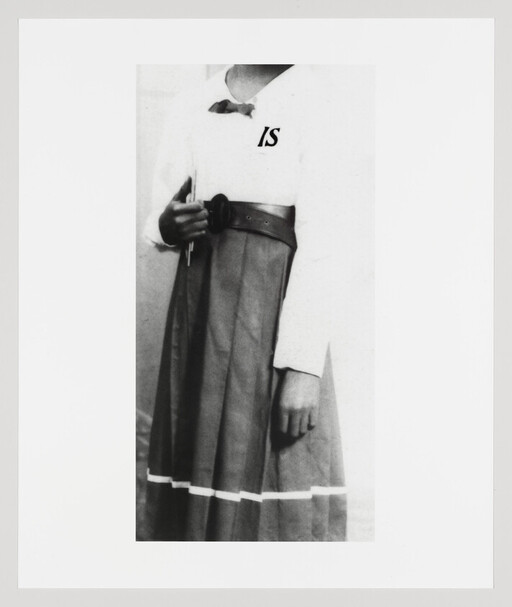
IS
The Car
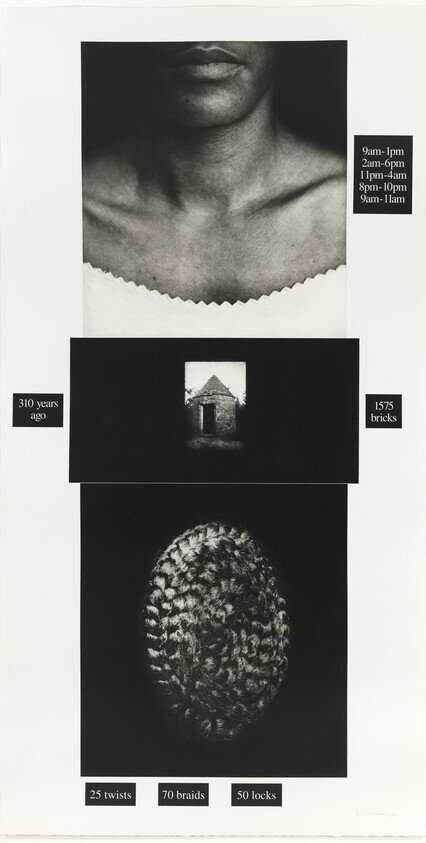
Counting
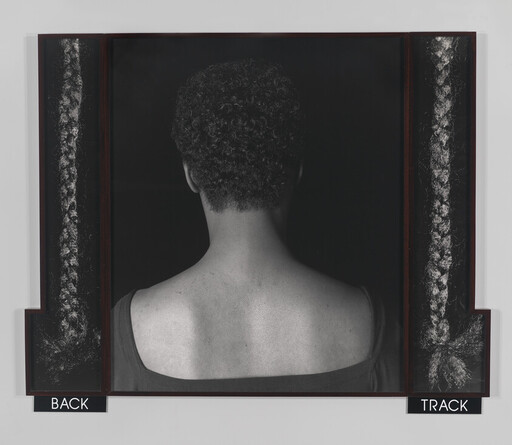
2 Tracks
Exhibitions at the Whitney
- Edges of Ailey 2024-09-25 – 2025-02-09
- Jason Moran 2019-09-20 – 2020-01-05
- America Is Hard to See 2015-05-01 – 2015-09-27
- In Parts 2013-06-13 – 2014-02-23
- I, YOU, WE 2013-04-25 – 2013-09-01
- Blues for Smoke 2013-02-07 – 2013-04-28
- Legacy: The Emily Fisher Landau Collection 2011-02-10 – 2011-05-01
- Lorna Simpson 2007-03-01 – 2007-05-06
- Pop/Concept: Highlights from the Permanent Collection 2004-07-01 – 2004-10-24
- To Be Human 2003-07-12 – 2003-10-26
- Lorna Simpson: Cameos and Appearances 2002-10-11 – 2003-01-26
- Lorna Simpson: 31 2002-10-11 – 2003-01-26
- Visions from America: Photographs from the Whitney Museum of American Art, 1940–2001 2002-06-26 – 2002-09-22
- Whitney Biennial 2002 2002-03-07 – 2002-05-26
- A Way with Words: Selections from the Whitney Museum of American Art 2001-01-19 – 2001-03-30
- Contemporary Narratives 1999-11-19 – 2000-02-02
- Hindsight: Recent Work from the Permanent Collection 1998-12-17 – 1999-02-21
- Heart, Mind, Body, Soul: American Art in the 1990's 1997-11-26 – 1998-01-04
- An American Story 1996-03-20 – 1996-09-29
- Permanent Collection Prints 1994-08-30 – 1994-11-27
- Whitney Biennial 1993 1993-03-04 – 1993-06-20
- Whitney Biennial 1991 1991-04-02 – 1991-06-30