Artist Biennial
Carl Andre
1935–2024
Biography
In the mid-1960s Carl Andre began making three-dimensional works using materials such as wood, bricks, metal, and precut stone, ordered directly from suppliers. His commitment to utilizing standardized elements and modular, repeating units aligned his practice with Minimalism, yet he preferred to call himself a “post-studio artist” because he conceived and arranged his works on site, in gallery settings, private homes, or public spaces. Instead of viewing the sculptural material as something to be cut into, Andre determined rather to “use the material as the cut in space.” He rejected traditional sculpture’s vertical orientation and its relationship to upright human bodies. Horizontal works, he argued, “run along the earth,” like a road, and indeed his floor works are meant to be walked upon. In fact, the artist once described the road as his “ideal piece of sculpture.”
Twenty-Ninth Copper Cardinal is composed of twenty-nine copper plates arranged one after the other, extending outward from the base of a wall in a straight line along the floor. This narrow, flat sculpture belongs to a larger series of Copper Cardinal works, begun in 1973. The configuration of each work in the series—either linear, square, or rectangular—depends on the number of units designated for it. Prime numbers of units, such as twenty-nine, are always placed in a line, whereas divisible numbers of units are arranged in rectangles or squares. By allowing spectators to walk on his floor pieces, Andre extends the viewer’s perceptual and physical understanding of sculpture. When standing toward the middle of Twenty-Ninth Copper Cardinal, the sculpture can appear to fall out of view or to extend beyond its visible boundaries.
Works in the collection
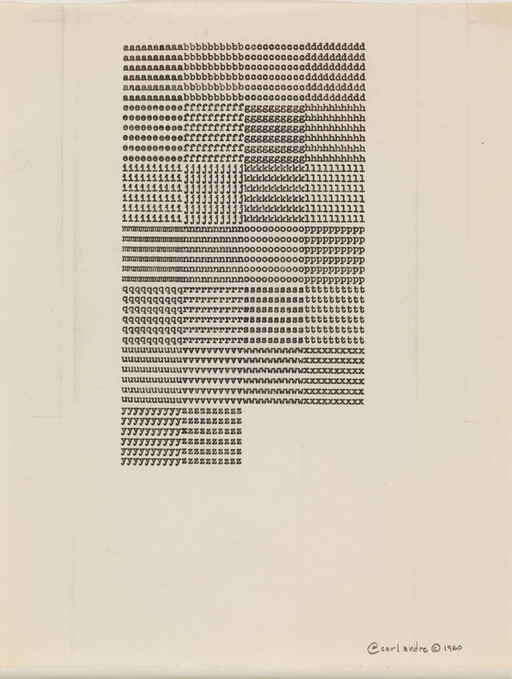
aaaaaaaaaabbbbbbbbbbccccccccccdddddddddd
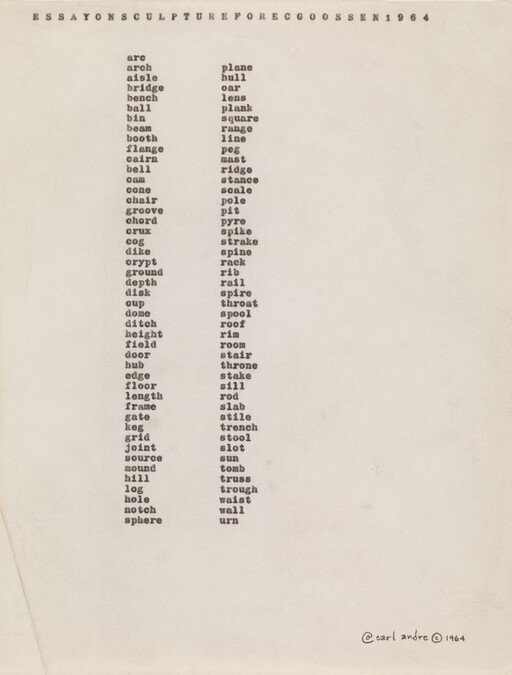
ESSAYONSCULPTUREFORECGOOSSEN
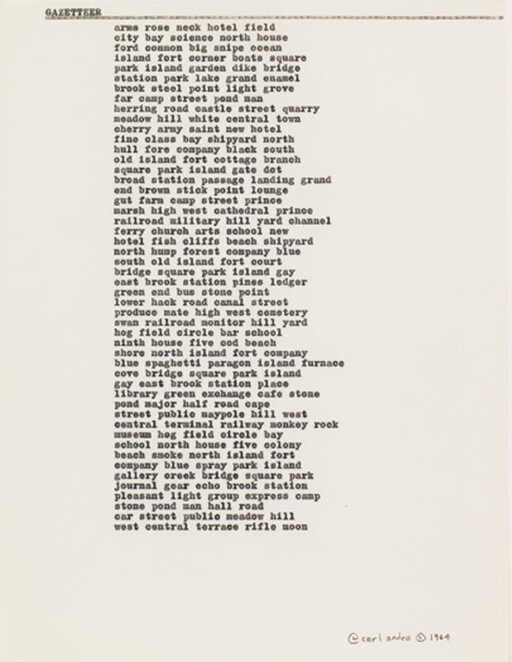
GAZETTEER
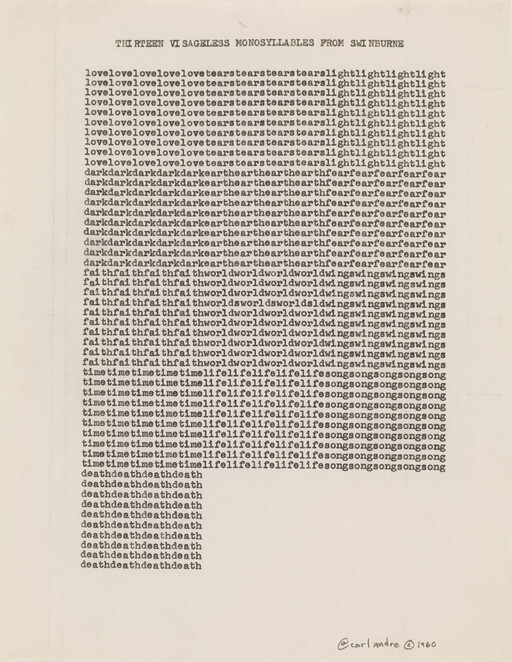
Thirteen Visageless Monosyllables from Swinburne
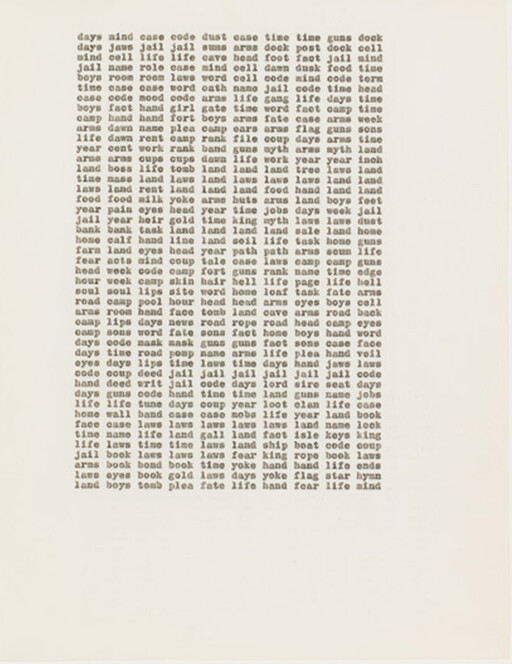
days mind case code dust case time guns dock
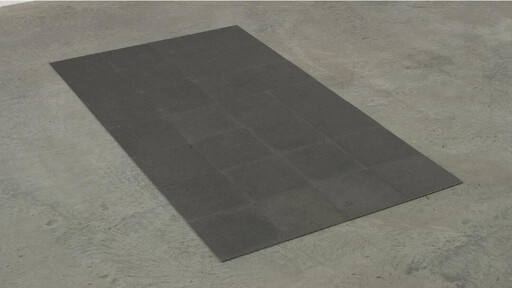
28 Lead Rectangle
A Portfolio of Thirteen Prints to Commemorate the Conversion of New York City's Second Avenue Courthouse Building into the New Home of Anthology Film Archives, the First Museum Dedicated to Avantgarde Film and Video
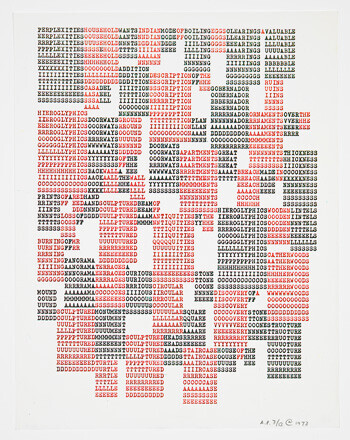
PERPLEXITIESHOUSEHOLDWANTSINDIANMODEOFBOILINGEGGSOCEARNINGSAVALUABLE<br>(from YUCATAN)
Paraglyph
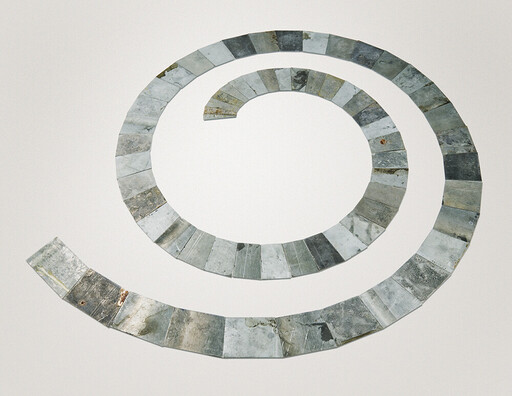
Smithsonite Spiral
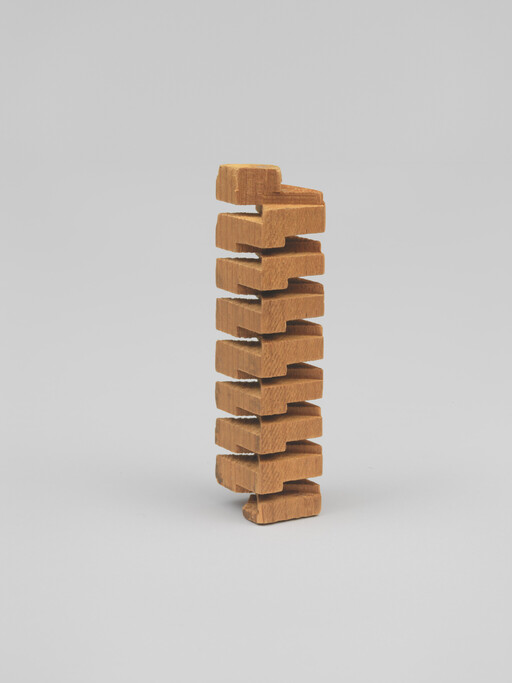
Quincy Slot Work
(The Title Of This Work Is Apparent When Taken Apart)
Untitled
The Rubber Stamp Portfolio
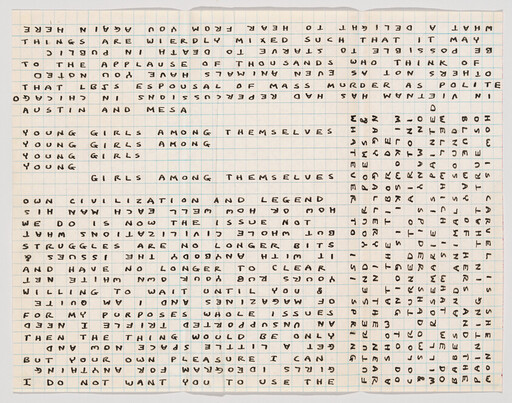
Letter to Doug Lawder
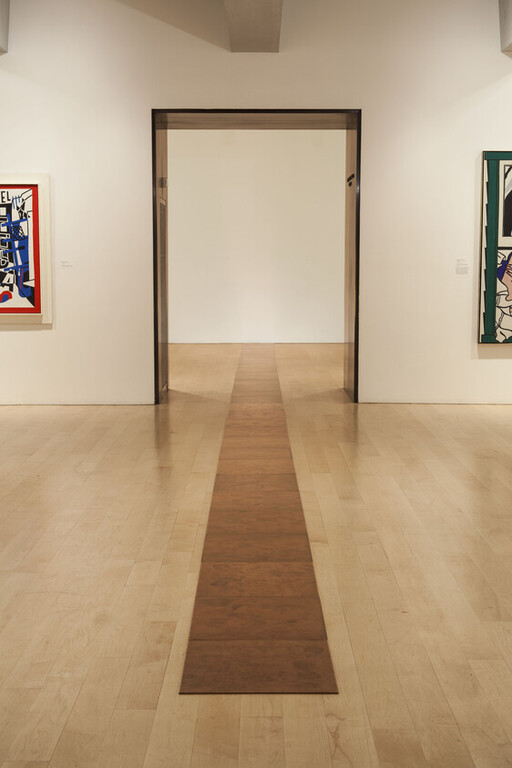
Twenty-Ninth Copper Cardinal
Exhibitions at the Whitney
- America Is Hard to See 2015-05-01 – 2015-09-27
- Legacy: The Emily Fisher Landau Collection 2011-02-10 – 2011-05-01
- Off the Wall: Part 1—Thirty Performative Actions 2010-07-01 – 2010-09-19
- The Whitney’s Collection 2008-01-30 – 2010-01-03
- Building and Breaking the Grid: 1962–2002 2005-09-01 – 2006-01-08
- Landscape 2005-03-24 – 2005-09-18
- Whitney Biennial 1973: Contemporary American Art 1973-01-10 – 1973-03-18
- 1970 Annual Exhibition: Contemporary American Sculpture 1970-12-12 – 1971-02-07