Artist Biennial
Mel Bochner
1940–2025
Biography
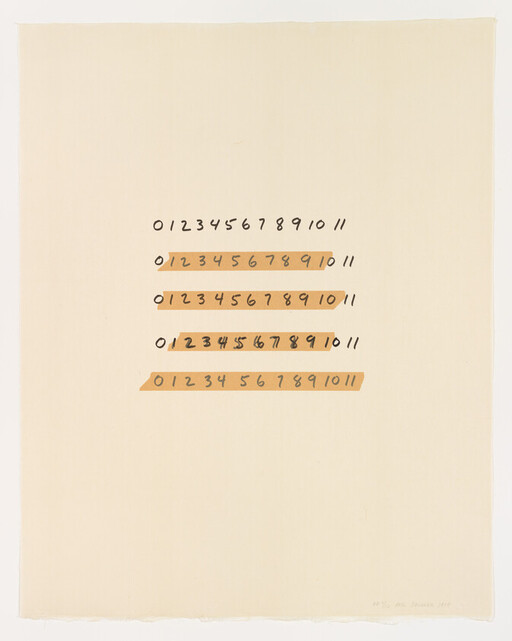
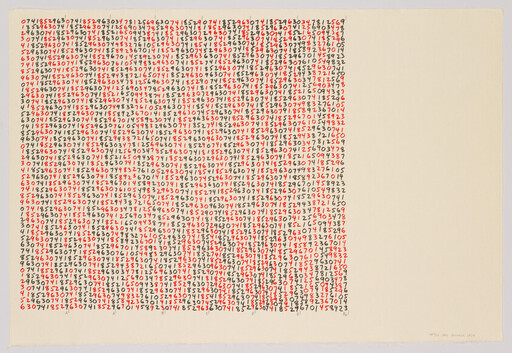
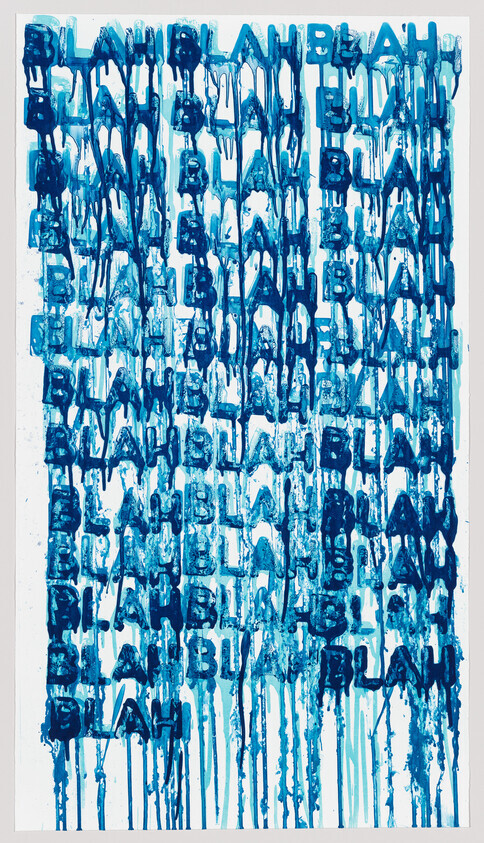
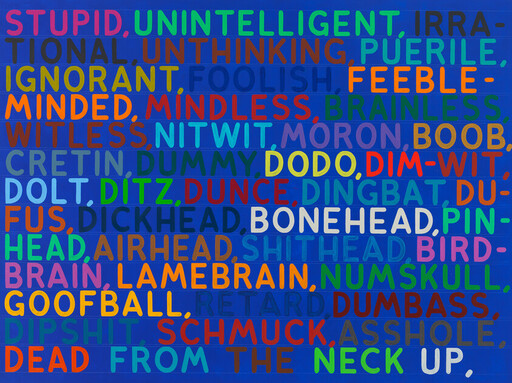
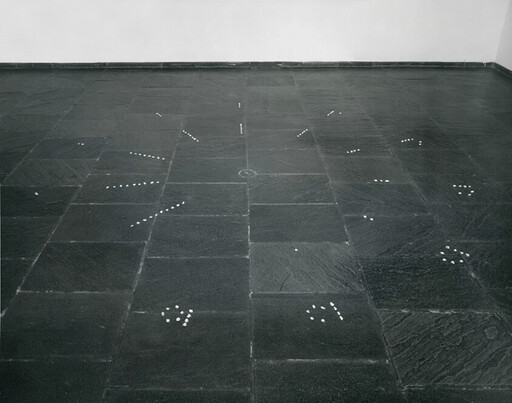
Mel Bochner has made conceptually and perceptually driven paintings, sculptures, drawings, photographs, and installations since the mid-1960s, often plumbing the relationships between language, space, objects, and color. He is credited with having kickstarted the Conceptual art movement in a 1966 exhibition for which he photocopied working drawings and other paper materials solicited from artist friends, placed the identically reproduced items in four black binders, then displayed them on pedestals in a gallery. In the late 1960s Bochner began to make site- specific projects consisting of ruled measurements in paint or tape and transfer- type numbers applied directly to gallery walls, turning these seemingly neutral spaces into life-sized diagrams of themselves. Such works challenge conventional notions of abstract thought and perception, testing Bochner’s assertion that “outside the spoken word, no thought can exist without a sustaining support.” He underscores this thesis in works that invert the representational system of photography. Rather than “using [photography] to look at something,” Bochner demonstrates how the medium is itself “something to look at”—an object.
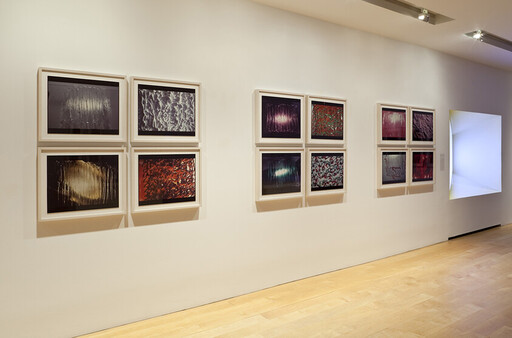
For Transparent and Opaque, Bochner hired a professional photographer to produce images of petroleum jelly and shaving cream, differing substances that might illustrate the terms of his title. He stroked or squirted the materials onto glass plates and then had them photographed under various brightly colored lights, in some instances staining the substances with red iodine. The twelve prints confound the relative transparency or opacity of the materials—the semiclear petroleum jelly, for example, casts shadows and reflections that impede its translucence— and suggest how these opposed qualities can be simultaneously present. They also draw attention to the transformative qualities of light and color, pairing images of petroleum jelly lit with pink-toned lights and shaving cream mixed with iodine to create a pink froth. As a result, Bochner challenges the traditional presumption that the camera’s “transparent” system precisely mimics the world as seen by the human eye.
Works in the collection
Exhibitions at the Whitney
- Around Day’s End: Downtown New York, 1970–1986 2020-09-03 – 2020-11-01
- Photoconceptualism, 1966–1973 2009-05-22 – 2009-09-20
- Building and Breaking the Grid: 1962–2002 2005-09-01 – 2006-01-08
- Evidence of Impact: Art and Photography 1963–1978 2004-05-29 – 2004-10-10
- Whitney Biennial 2004 2004-03-11 – 2004-05-30
- Visions from America: Photographs from the Whitney Museum of American Art, 1940–2001 2002-06-26 – 2002-09-22
- Flashing into the Shadows: The Artist's Film in America 1966–1976 2000-12-07 – 2003-10-25
- Whitney Biennial 1979 1979-02-06 – 1979-04-01
- Whitney Biennial 1977: Contemporary American Art 1977-02-19 – 1977-04-03
- 1970 Annual Exhibition: Contemporary American Sculpture 1970-12-12 – 1971-02-07